Durable Acoustic Panels: Where Absorption and Abuse Have to Coexist
Durable acoustic panel manufacturers produce panels for gyms, workshops, sports halls, industrial enclosures, and high-traffic public areas—spaces that need sound control and also subject the panels to impact, abrasion, moisture, or cleaning. The design challenge is combining two properties that normally pull in opposite directions: sound absorption favors lightweight, porous, open structures, while durability favors dense, hard, closed surfaces.
The core determines the absorption. Porous absorbers made from mineral wool, fiberglass, or open-cell foam convert sound energy into heat as air moves through the material. The thickness and the density determine which frequencies the panel absorbs. A thin panel absorbs high frequencies but does little for low-frequency sound. A thicker panel extends absorption into lower frequencies but adds weight. Factories producing durable panels often use a denser core than standard acoustic panels, because density contributes to impact resistance.
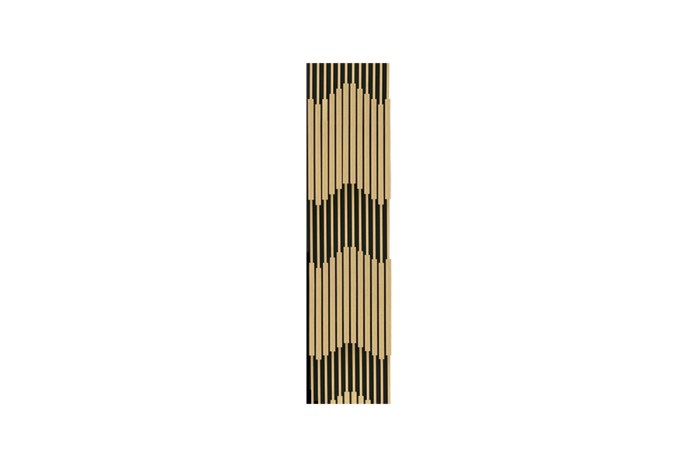
The facing achieves the durability and affects the acoustics. A perforated metal or plastic facing protects the core while allowing sound to pass through the openings. The percentage of open area, the hole size, and the facing thickness determine how much sound reaches the core. A facing with too little open area reflects sound and reduces absorption. One with too much provides less protection. Factories that tune the facing specification balance acoustic performance against the abuse the panel will receive.
Fabric-wrapped panels offer a different trade-off. The fabric provides a soft appearance and good acoustic transparency but is vulnerable to tearing, staining, and moisture. A durable fabric-wrapped panel uses a tightly woven, coated fabric that resists abrasion and can be cleaned. The fabric must remain permeable enough to let sound through, which limits how much coating can be applied.
Mounting and edge treatment affect both durability and appearance. A panel glued directly to a wall is vulnerable to impact at the edges. One mounted on a frame or with a protective edge trim resists damage. Edge treatment also affects the acoustics, because sound can diffract around the edges and reduce the effective absorption area. Factories that design the edge and the mounting together produce panels that perform.
Moisture resistance is required in many of the environments where durable panels are used. Mineral wool cores can absorb moisture and lose performance. Some factories use moisture-resistant binders or closed-cell cores. The facing and the edge treatment also contribute, because water enters at the seams and edges as much as through the face.
The market implication is that durable acoustic panel manufacturers compete on the balance between absorption and abuse resistance rather than on the acoustic rating alone. Buyers in gyms and workshops need the panel to absorb sound and survive the environment. Factories that treat the acoustic performance and the physical durability as a combined design problem are better positioned than those that start with a standard acoustic panel and add a protective layer.