Land Capability Assessment Cost and Commercial Land Capability Assessments
If your site is not connected to the sewer, a Land Capability Assessment (LCA) is one of the first costs in your project. Two questions come up most often. The first is Land Capability Assessment cost: how much should you budget, and what drives the price? The second, for businesses and developers, is how commercial Land Capability Assessments differ from a residential one. This guide answers both, using the published material of Septic Land Capability Assessment (SLCA), a Victorian provider.
What an LCA Is
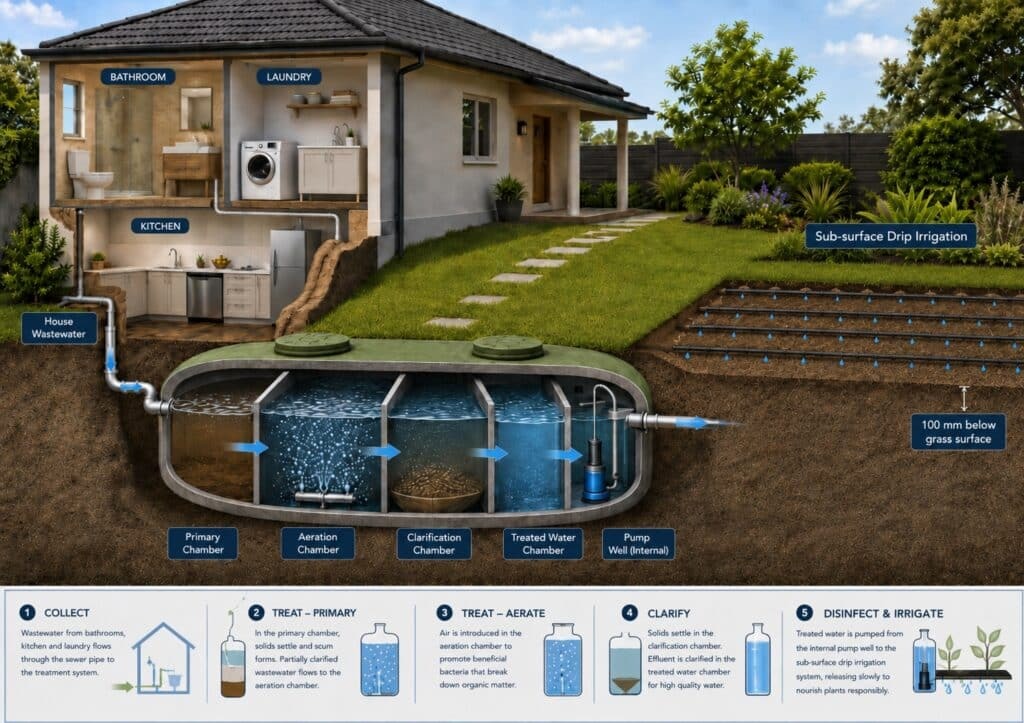
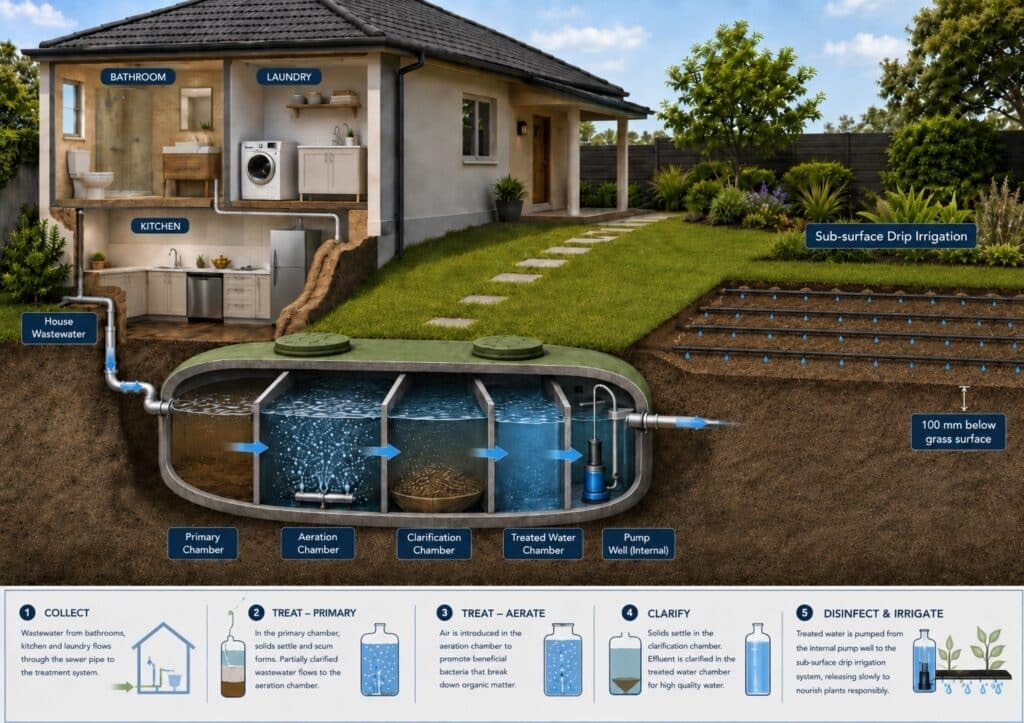
An LCA for septic effluent is a specialised evaluation of whether a piece of land can host a septic system and treat and absorb wastewater without risk to health or the environment. SLCA’s articles explain that it involves analysing soil characteristics, topography, groundwater levels, vegetation, and the proximity of water bodies. It is relevant wherever there is no municipal sewer connection, which is why it matters for rural blocks, new builds, subdivisions, and upgrades.
Land Capability Assessment Cost: What to Expect
Price is the question people ask first, and the honest answer is “it depends”. SLCA’s article on LCA costs says the price varies with property size, location, and the complexity of the analysis. As a rough guide, the article suggests a basic assessment for a standard residential property might run from about $1,500 to $3,000, while complex jobs, such as larger properties or ones with difficult terrain or soils, can reach $5,000 or more. It says these amounts cover soil testing, site visits, percolation tests, and the detailed report.
Two cautions apply. The article was published in 2024, so treat the figures as a guide rather than a current price list. And they are SLCA’s own illustrative ranges, so the only reliable number is a written quote for your site.
What Pushes the Cost Up or Down
- Property size and number of test areas. More ground to assess generally means more fieldwork.
- Soil and terrain. Clay, sandy, rocky, or steep sites can need more investigation. SLCA publishes separate articles on clay soils and sandy soils because they behave very differently.
- Constraints. Setbacks from boundaries and waterways, and the size of the dispersal area you need, can complicate the assessment.
- Purpose and scale. A single dwelling is simpler than a subdivision or a business with higher flows.
- Site access. Difficult access can add time.
Practical Ways to Avoid Surprises
- Ask for a written, itemised quote and check what the fee includes, such as site visits, testing, and the report.
- Supply what you have. Site plans, previous reports, and your planned bedroom count or usage help the assessor scope the work correctly.
- Check council requirements first. If your council has sent a request for information, share it with the assessor so the report answers it.
- Allow for the system itself. The LCA is only the first cost. SLCA also publishes an article on the running costs of secondary treatment systems and notes there are always several options.
SLCA offers an obligation-free quote, and its articles invite readers to contact Chris for a friendly chat or a detailed quote. The phone number shown on its site is 0400 372 763.
Commercial Land Capability Assessments
Not every LCA is for a house. SLCA’s About page lists three sectors it serves: residential homeowners and developers, commercial developments, and municipal and private planning. For commercial projects, it says the focus is ensuring the land is suitable for septic systems in commercial settings.
Why Scale Changes the Rules
SLCA’s article for private planners, developers, council public works, and businesses explains an important dividing line. As it describes, effluent systems that discharge under 5,000 litres a day are generally assessed by the local council, and these are common in residential developments and small businesses. Systems discharging more than 5,000 litres a day fall under the Environmental Protection Agency (EPA) rather than the council. These larger systems are often tied to commercial or industrial developments and need a more detailed assessment, which can include more rigorous soil testing, hydrological studies, and possibly advanced treatment technology.
This is the company’s explanation, so confirm the thresholds and approval pathway for your project with your council or the EPA, since rules change.
What Commercial Clients Should Prepare
- An estimate of daily wastewater flow. It determines who approves the system, and it drives the size of the system and the land you need.
- The type of business and its wastewater. A café, a motel, and a workshop produce different effluent.
- A site plan showing buildings, boundaries, and waterways.
- Timing. The LCA is best done early. SLCA stresses that it can affect what can be built and where.
Because larger systems need more investigation, expect commercial assessments to cost more than the basic residential range. Ask for a quote based on your expected flows and site.
Who Does the Work
The About page says the work is led by a tertiary-qualified geoscientist (BGeolSc, Monash), with up-to-date training and regulatory compliance. It lists three strengths: experience, comprehensive services, and regulatory compliance. A testimonial on the page describes professional service with detailed insights. SLCA offers site evaluation, soil testing, and percolation testing, and it services the whole of Victoria.
Keeping Up With the Guidelines
LCA requirements are not static. SLCA’s blog includes an article on new EPA Land Capability Assessment guidelines released in May 2024. Whatever you read online, ask your assessor which current guidelines the report follows and check that your council accepts it.
Getting Started
Browse SLCA’s articles for background, then request a quote. Call 0400 372 763 or use the contact form on the website, and have your address, site plan, and project description ready.
Frequently Asked Questions
1. How much does a Land Capability Assessment cost? SLCA’s 2024 article suggests roughly $1,500 to $3,000 for a basic residential assessment and $5,000 or more for complex jobs. Costs vary, so ask for a written quote.
2. What does the fee usually cover? According to SLCA, soil testing, site visits, percolation tests, and the preparation of a detailed report.
3. What affects the price? Property size, location, soil and terrain, constraints such as setbacks, the scale of the project, and site access.
4. Do commercial projects need an LCA? SLCA lists commercial developments among the sectors it serves, to ensure land is suitable for septic systems in commercial projects.
5. Who approves larger systems? SLCA explains that systems under 5,000 litres a day are generally councils’ responsibility and larger ones fall under the EPA. Confirm the current rules for your project.
6. When should I get an LCA? Early in planning, since it can affect what can be built and where.
7. Does SLCA work across Victoria? Yes, it services Victoria-wide and works with residential, commercial, and municipal clients.
8. How do I get a quote? Call 0400 372 763 or use the contact form at septiclandcapabilityassessment.com.au.