Mechanical Interlocking Socket: The Linkage Engagement Decides the Load-Safe Disconnect
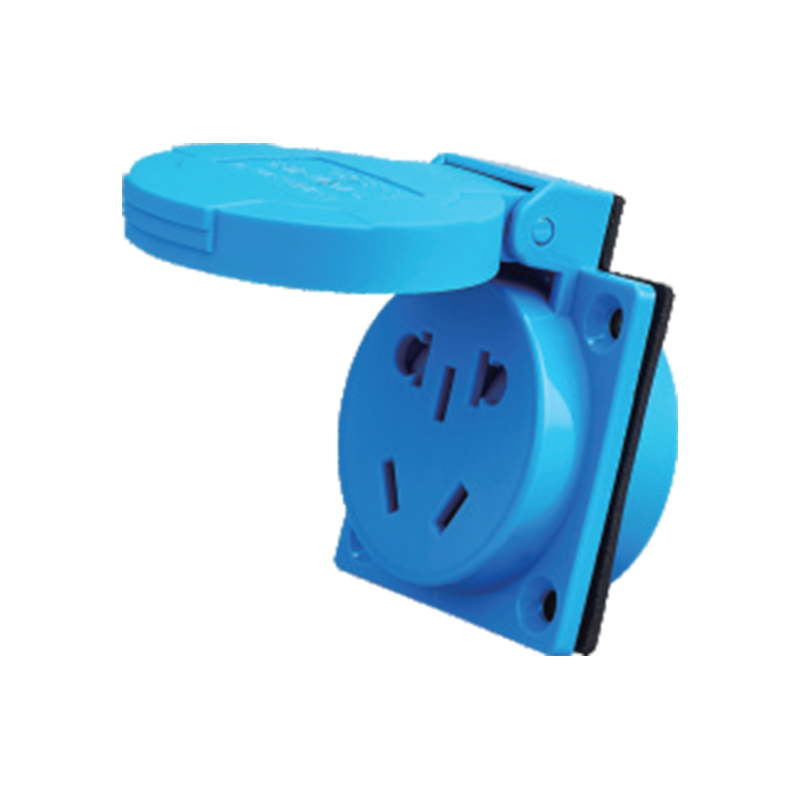
A mechanical interlocking socket is a power outlet fitted with a built-in locking linkage that ties the socket to a switch, cover, or plug position, so the connector cannot be pulled out while the circuit is live and access can only be opened after power is removed. It is used in industrial panels, machinery, workshops, and fixed installations where accidental unplugging under load would cause arcs, downtime, or hazard. Buyers usually compare pole count, housing rating, switch type, and enclosure color. The property that decides whether the interlock actually prevents a live disconnect is how firmly and consistently the locking linkage engages, and it is the feature most buyers overlook.
The linkage ties the socket to the power state. The internal mechanical part must connect the plug position, the switch, and the lock so that current flows only when the plug is seated and locked, and the lock releases only after the switch has cut the circuit. A linkage that does not fully connect leaves the plug able to withdraw while live, defeating the safety function; a positive, engaged link keeps the connector held until power is off.
Lock engagement must repeat every cycle. Each time the plug is inserted, the lock should catch positively and hold; each time the circuit is switched off, it should release cleanly without sticking. A mechanism that catches only sometimes, or jams halfway, either leaves the plug unlocked or traps it in the socket. Consistent engagement and release make the interlock dependable use after use.
Wear resistance keeps the linkage working over cycles. The locking lever, pin, or catch moves on every operation, so its parts must resist wear, deformation, and spring fatigue that would loosen the hold or jam the release. Soft or worn locking parts round over and lose their grip; hardened, matched linkage parts hold their action through a long service life.
Door and switch integration keep the interlock tied to current. Where the socket has a hinged cover, the door should remain blocked until the interlock allows it, so live contacts cannot be exposed by opening the cover first; a linked cover stays closed until the safe state is reached. The mechanical lock must also be linked to the actual switching contact, not acting as a separate latch that can be overridden; a true mechanical-to-switch linkage releases only when the circuit has been interrupted.
Contact retention and insulation support the locked state. Inside the socket, the contacts must hold the plug firmly while the lock is engaged, so vibration or tugging does not work the connector loose; contacts that back off under load let the plug shift even though the lock shows engaged. The housing and separators must also keep live parts isolated while the mechanism moves inside, so the linkage itself does not create a short or touch path.
Consistency keeps each unit dependable. Every socket off the line should repeat the same linkage travel, lock catch, and release timing, so the interlock rating holds order after order. Loose tolerances leave some mechanisms engaging firmly and others loose or binding; steady tooling and cycle testing keep the linkage even across production.
Operate a sample interlock socket through a full cycle rather than reading the label: insert the plug and confirm the lock catches with a firm hold, switch the circuit off and check that the release follows only after shut-off, try to withdraw the plug while the power state is still active to test the lock, open the cover to see whether it stays blocked until safe, and work the mechanism repeatedly to look for sticking or wear. These linkage engagement, cycle consistency, wear resistance, door interlock, switch integration, contact retention, and insulation qualities decide whether the socket prevents a live disconnect reliably. A manufacturer that builds a positive locking linkage, ties it to the switch, and cycles tests each mechanism sends out interlock sockets that hold and release safely; one that treats the linkage as a secondary detail delivers outlets that unlock under load, jam or stick, open independently, or wear loose after repeated operation.