One More Jump: Finding the Rhythm in Geometry Dash
Introduction
Some games make you think about maps, characters, or complicated plans. Geometry Dash asks a simpler question: can you jump at exactly the right moment? Its bright shapes and quick music make the answer feel easy at first. Then a row of spikes appears, the floor disappears, and one small mistake sends you back to the beginning.
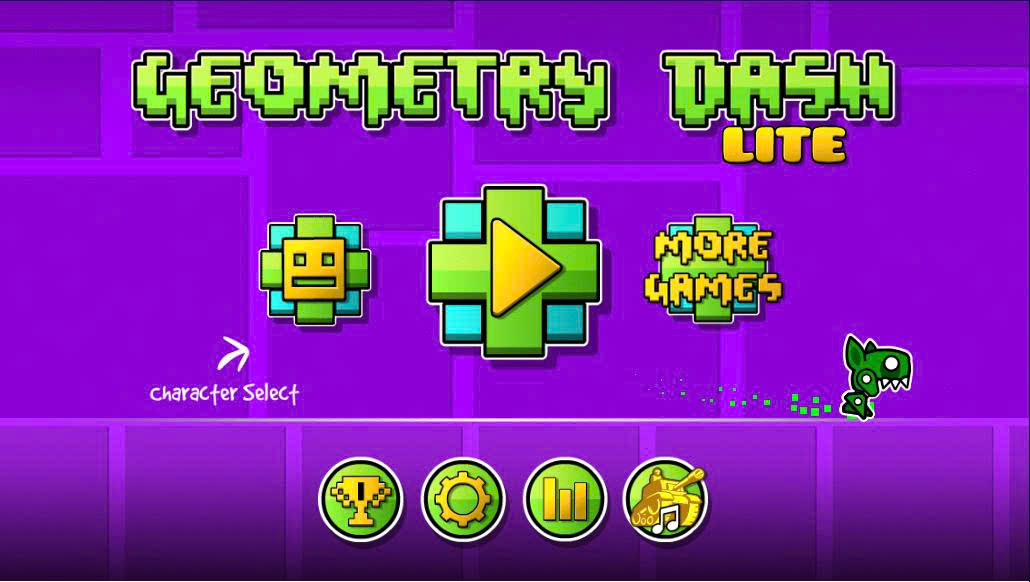
That simple challenge is a big part of the fun. A jump is not only a jump; it is a tiny test of timing, attention, and patience. Each attempt gives you another chance to understand the level. You begin to notice how the music fits the obstacles, where the path changes, and what your hands need to do. If you want to explore the game, you can find Geometry Dash and try its fast, rhythm-based obstacle courses.
The most enjoyable way to approach it is not to expect an easy win. Treat each run as a chance to learn something. With that mindset, even a short section that takes several tries can become satisfying.
Gameplay
The basic idea is easy to understand. You guide a small geometric character through a side-scrolling level, jumping over hazards and moving through openings without hitting anything. In many sections, the character moves forward automatically, so your main job is to watch the path and respond at the right moment. A click or tap can make the character jump, but the challenge comes from choosing when to act.
The shapes and obstacles are clear, yet the levels can change quickly. You might leap over a row of spikes, land on a small platform, and then face another obstacle before you have time to relax. Later, a portal can change how your character moves. You may find yourself flying through a narrow passage or bouncing in a different way than before. These shifts keep the experience from feeling like the same jump repeated forever.
Music gives the action another layer. Obstacles often seem to move with the beat, and once you recognize a pattern, the level can feel like a piece of music you are learning to play. The rhythm will not solve every moment for you, but it can help you predict what is coming. Instead of reacting to each shape at the last second, you start to feel the timing.
A failed attempt can be frustrating, especially when you are close to the end. Still, it also shows you where your timing went wrong. Perhaps you jumped too early, held the button too long, or focused on the character instead of the next obstacle. After a few attempts, a difficult stretch may begin to feel familiar. That change, from confusion to recognition, is one of the game’s small pleasures.
Tips
Watch what comes next. It is natural to stare at your character, but try to look a little farther along the path. Spotting the next set of obstacles early gives you more time to prepare. You do not need to study the entire level at once. Focus on the next few seconds and adjust as the scenery moves.
Use the music as a guide, not a rule. The beat can help you sense the pace of a section, especially when jumps arrive in a regular pattern. Listen for repeated sounds and notice how they line up with the action. If a jump does not match the beat exactly, trust what you see on the screen.
Practice difficult sections in smaller pieces. When a level offers a practice option, use it to learn the parts that keep causing trouble. Checkpoints let you return to a nearby spot instead of replaying the whole course every time. Pay attention to what happens just before a mistake. Knowing the setup can be more useful than simply repeating the same jump.
Make your inputs deliberate. Random tapping may work for a moment, but it is hard to learn from. Try to make each jump a conscious choice. Notice whether you need a quick press or a longer hold, and give yourself a brief pause after a mistake. A calmer attempt often teaches you more than an irritated one.
Take breaks when the level stops being fun. Repeating a tough section can help, but tired eyes and tense hands make timing harder. Step away for a few minutes, then return with a fresh mind. Sometimes a short break is enough to make a pattern that once looked confusing seem obvious.
Enjoy the small improvements. Reaching a new platform, surviving an extra few seconds, or finally understanding a tricky sequence all count as progress. You do not have to complete a difficult level in one sitting for the experience to feel rewarding. Notice what you have learned, not only how far you have reached.
Conclusion
Geometry Dash turns a very small action into a lively challenge. A carefully timed jump can carry you past spikes, through changing movement patterns, and into a rhythm that feels almost automatic. The game rewards attention and patience, but it also leaves room for lighthearted trial and error.
Whether you are playing for a few minutes or working toward a level you have nearly mastered, let curiosity guide you. Listen to the music, watch the path, and treat each attempt as useful practice. When the timing finally clicks, the obstacles that once seemed impossible can feel like part of a fast, satisfying dance.