Black Wood Hexagon Color Pencils: Production Support for Colored Drawing Instrument Manufacturing
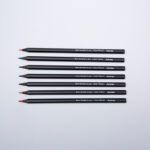
Black wood hexagon color pencils are drawing instruments with a six-sided barrel made from dark-stained wood and a colored core that deposits pigment onto paper. The hexagonal profile resists rolling and offers multiple grip positions, while the black wood barrel provides a distinctive appearance that distinguishes these pencils from natural-finish alternatives. These pencils are used in art instruction, illustration, hobby drawing, and promotional sets. Production operations for this category include pigment blending, core extrusion, slat processing, staining, shaping, and finishing, and equipment suppliers provide after-sales support that helps factories maintain output quality.
Pigment blending is a foundational stage at a factory producing black wood hexagon color pencils. Each color requires a specific formulation of pigment, binder, and filler to achieve the desired hue, opacity, and laydown characteristics. Consistency from batch to batch matters because artists and students expect predictable color performance. Equipment suppliers provide maintenance support for mixing systems, including agitator condition assessment, weighing accuracy verification, and moisture control monitoring. This support helps factories achieve repeatable core characteristics across the color range.
Core extrusion converts the blended pigment mass into continuous rods that are cut to length and dried. Extrusion presses must maintain consistent pressure and die condition to produce cores with uniform diameter and density. Some pigment formulations are more abrasive than graphite, and this characteristic affects die wear rates. Equipment suppliers provide service support for extrusion systems, including die inspection, pressure verification, and drying oven temperature calibration.
Wood slat processing prepares the wooden components that surround the colored core. Slats are cut, grooved, and conditioned before receiving the cores. Equipment suppliers provide support for grooving machines, including cutter alignment verification, groove depth measurement, and feed rate adjustment.
Staining operations give the wood its black appearance. Dye penetration must be uniform, and the process must not introduce moisture gradients that could cause warping during subsequent processing. Equipment suppliers provide support for staining systems, including immersion time control, drying condition verification, and color consistency monitoring.