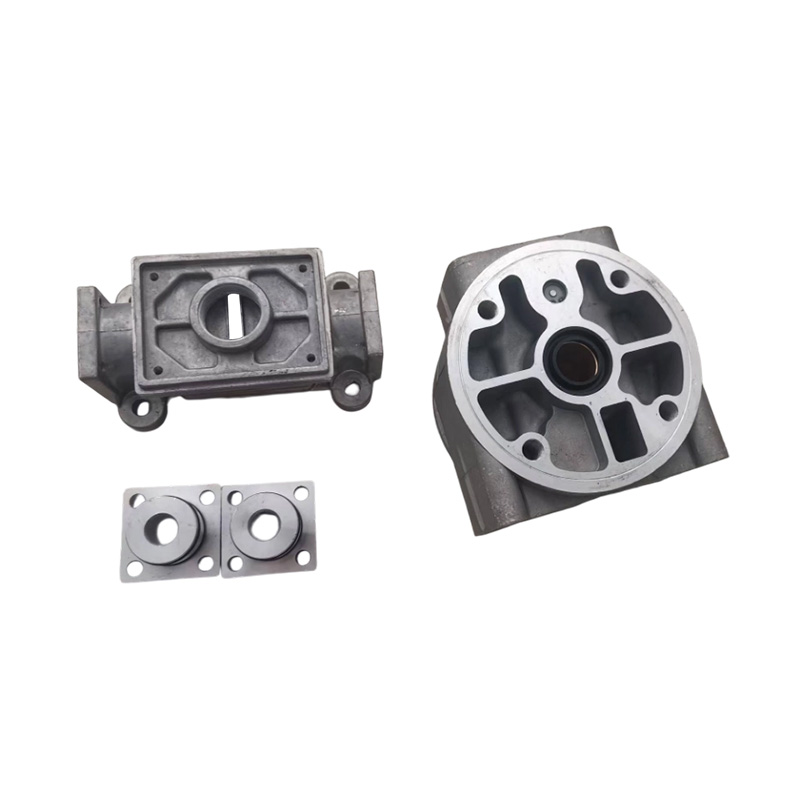
Diaphragm Pump Castings Factory: Core-to-Shell Alignment Decides Passage Fit
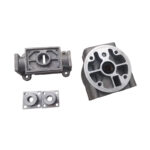
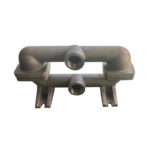
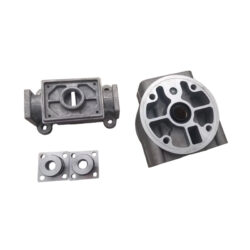
A diaphragm pump castings factory produces the cast bodies, manifolds, air chambers, and housings that later machine into diaphragm pumps for industrial and fluid-transfer use, delivering rough or semi-finished cast parts to pump assemblers. Buyers usually compare casting weight, listed alloy, surface treatment, and the range of parts in the catalogue. The property that decides whether internal passages line up with external ports, the two mold halves match flush, and the casting repeats true pour after pour is the core-to-shell alignment and parting-line control held through the molding process, and it is the detail most buyers overlook.
Core position keeps internal passages aligned. The sand or metal core that forms the fluid and air channels must stay fixed in the mold so the passage sits where the drawing expects, centered between the external walls and aimed at the port openings. A shifted core leans a passage off the bore, leaves one wall thin, or misaligns it with the outlet; a fixed, registered core keeps the internal channel true to the shell.
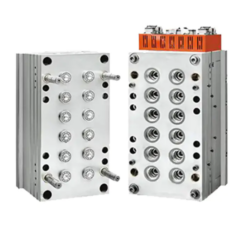
Parting line meets flush. The two halves of the mold must close together evenly, so the casting’s split line shows no offset step, mismatch, or heavy flash that would need grinding across the mating surface. A mold that closes loosely leaves a stepped parting line and uneven wall; a closed, matched mold produces a clean split with aligned halves.
Gating, feeding, and solidification control shrinkage. The gates and risers that feed molten metal must direct metal so the casting solidifies without drawn spots, with feed material toward the thicker sections, and the section should cool in a controlled sequence so no isolated thick zone traps shrinking metal away from the feeder. Poor feeding leaves shrinkage at the hot spots; an orderly solidification sequence feeds the last-to-freeze sections.
Melt consistency and pattern condition repeat pour to pour. The alloy charge should hold a steady composition and pouring heat from batch to batch so the metal flows and solidifies the same way every run, and the pattern and mold must carry proper draft and stay free of worn or damaged edges so the casting releases cleanly and keeps its original outline. Variable melt makes some castings porous or soft; a worn pattern rounds features and drifts the wall.
Gate removal and batch consistency keep parts matching. Where gates and feeders are broken off, the remnant should trim flush without leaving a deep scar or rough defect-prone spot, and castings off the line should repeat the same core position, parting match, feed soundness, and outline one after another as the mold ages. Tooling that drifts over time leaves later parts offset; controlled mold maintenance and inspection keep the batch uniform.