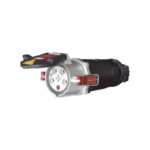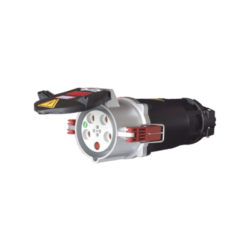
High-Performance 200A Industrial Power Plugs: The Contact Interface Decides the Heat
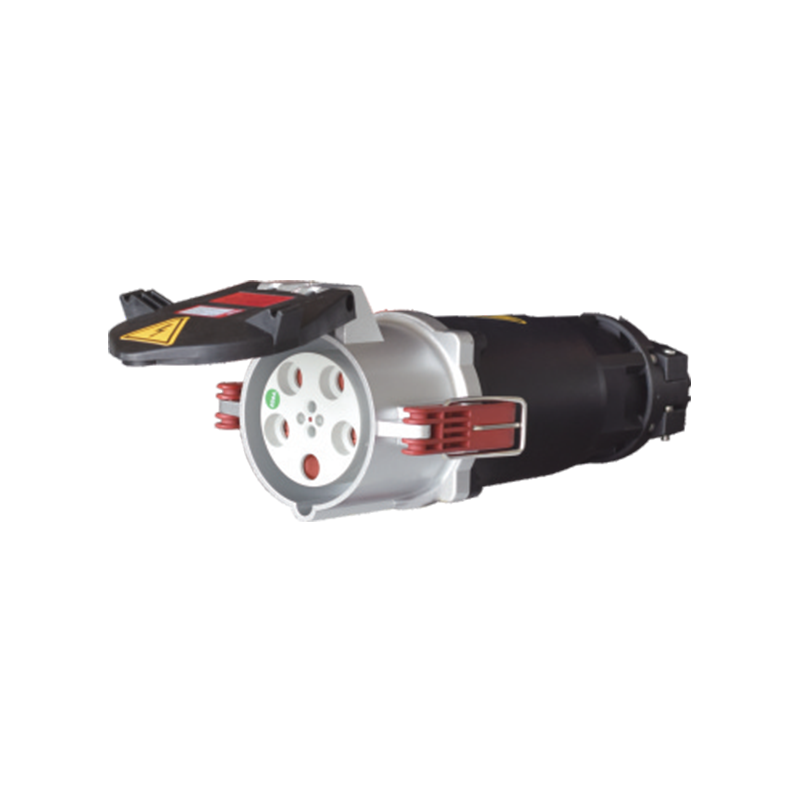
High-performance 200A industrial power plugs sit at the top of the current range, where equipment such as large welders, temporary distribution boards, and heavy-duty compressors draws current that turns any contact resistance into heat. Buyers compare current rating, IP rating, and housing material. The specification that decides whether the plug survives its rated current is the contact interface, and it is the part of the plug the buyer never sees.
At 200 amps, the power dissipated in a contact rises with the square of the current. A contact resistance that would be acceptable at 16 amps produces a large heat load at 200. The contact interface—the surface area, the pressure, and the plating—determines the resistance. A contact that is slightly undersized or that has lost its pressure runs hot, and the heat accelerates the deterioration of the plating and the spring.
The contact plating determines how the interface holds up. Silver plating offers low resistance and resists oxidation, which matters because an oxide layer increases resistance. Tin plating is less expensive but forms an oxide that raises the resistance over time. Factories that specify the plating for the current rating and the environment produce plugs that maintain their resistance.
The spring design determines whether the pressure holds. A contact that relies on the plug’s insertion force alone loses pressure as the contacts wear. A contact with a dedicated spring maintains its pressure through thousands of cycles. Factories that design the spring for the current rating produce plugs that do not loosen.
The housing must manage the heat and the mechanical load. At 200 amps, the housing must dissipate heat and resist deformation. A thermoplastic that softens at high temperature loosens the contacts further. A thermoset or a metal housing holds its shape. Factories that match the housing to the current rating produce plugs that run cool.
The cable entry must accommodate the large conductor that 200 amps requires. A cable entry that is too small forces the installer to use a thinner conductor, which defeats the rating. Factories that specify the cable range for each plug let the installer match the conductor to the current.
The locking mechanism must resist the vibration and the movement of heavy equipment. A plug that works loose under vibration creates an arc and a hazard. Factories that design the locking for the application produce plugs that stay engaged.
The practical question for a buyer is not the current rating on the label. It is how the contact interface manages the heat at that current. That answer decides whether the plug runs cool through a shift or becomes a hot spot. A plug that carries 200 amps on paper and overheats in service is a plug that fails the equipment it connects.