Insulating Yellow Fiberglass Board: Production Support for Electrical Grade Laminate Manufacturing
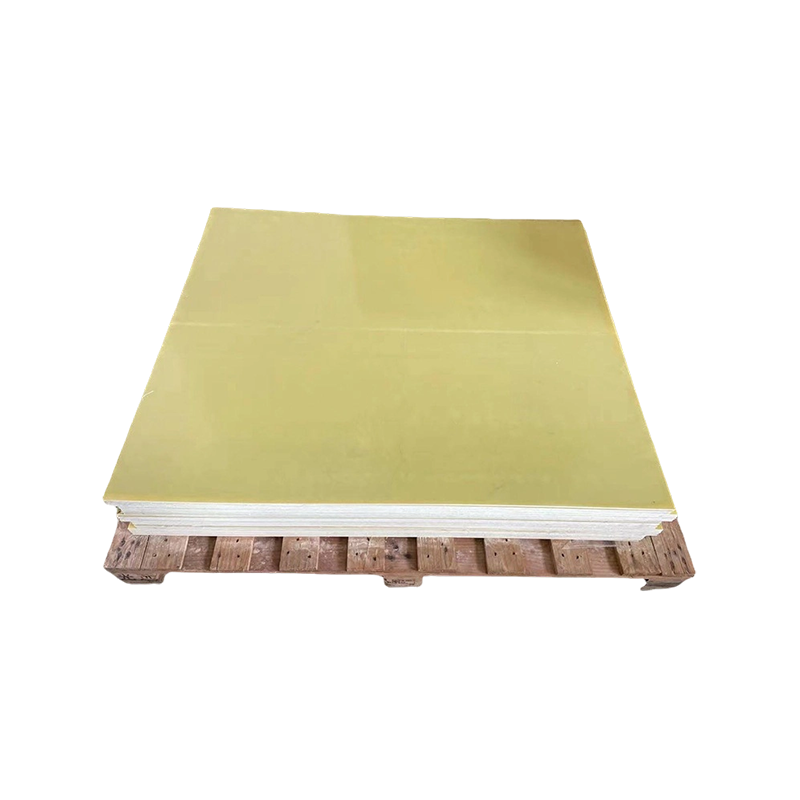
An Insulating Yellow Fiberglass Board is a composite laminate made from woven glass fabric bonded with a resin system that provides dielectric strength, mechanical rigidity, and resistance to thermal aging. The yellow color is characteristic of specific resin chemistries and is often used as a visual identifier for this material grade. These boards are used in transformer barriers, motor slot insulation, switchgear components, and terminal boards where reliable electrical isolation is required. Production operations for this category include glass fabric preparation, resin formulation, impregnation, lay-up, pressing and curing, and testing, and equipment suppliers provide after-sales support that helps factories maintain output quality.
Glass fabric preparation is an early stage at a factory producing insulating yellow fiberglass board. The woven glass cloth receives a finish that promotes adhesion between the glass fibers and the resin matrix. Equipment suppliers provide maintenance support for treatment lines, including bath concentration monitoring, roller pressure verification, and drying oven temperature calibration. This support helps factories achieve consistent fabric surface condition prior to impregnation.
Resin formulation is a stage where the electrical and thermal properties of the finished board are established. The epoxy or other resin system is combined with hardeners and additives in proportions that determine cure behavior, dielectric performance, and thermal endurance. Equipment suppliers provide service support for mixing and metering systems, including pump calibration, flow rate verification, and temperature control checks. This support helps factories achieve consistent resin formulation across production batches.
Impregnation operations saturate the glass fabric with the resin system. Uniform wet-out is important because incomplete impregnation can produce voids that reduce dielectric strength and create paths for electrical tracking. Equipment suppliers provide support for impregnation lines, including roller pressure adjustment, bath level control, and web tension verification.
Lay-up operations stack the impregnated fabric sheets to build the target thickness. The number of plies and their orientation influence mechanical properties, dimensional stability, and electrical performance. Equipment suppliers provide support for lay-up stations, including sheet alignment verification and contamination control practices.