Mus musculus Liver Hepatocytes: A Key Model for Liver Research
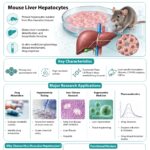
Primary hepatocytes isolated from mouse (Mus musculus) liver serve as a highly relevant in-vitro model that closely mimics the metabolic, detoxification, and biosynthetic functions of the intact liver. These parenchymal cells retain high metabolic activity and express functional Phase I & II drug-metabolizing enzymes (CYP3A, CYP2E1, CYP1A2), along with key biomarkers such as Albumin, HNF4α, and CK18.
Widely used for drug metabolism, hepatotoxicity screening, NAFLD/NASH, fibrosis, hepatitis, regenerative medicine, and pharmacokinetic studies including drug-drug interactions.
Why choose them? Cost-effective, genetically tractable, extensive transgenic/knockout models available, and strong translational relevance due to high genetic similarity with humans.