Precision Casting Butterfly Valve Body: Tooling Investment Shifts as Buyers Demand Near-Net Shape
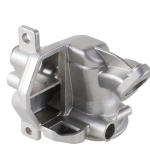
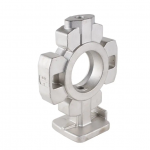
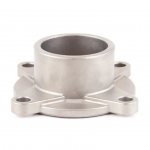
Precision casting butterfly valve body production is moving toward near-net shape as buyers in water treatment, HVAC, and industrial flow control push for shorter machining cycles and more consistent wall thickness. The change is not driven by a new valve standard. It comes from buyers who have compared the total cost of a conventional sand casting against a precision casting and found that the savings in machining and scrap outweigh the higher tooling cost.
Suppliers report that the shift is most visible in the mid-size range, where valve bodies are large enough that machining time matters but small enough that tooling investment can be recovered across a reasonable production volume. A body cast closer to final dimensions requires less material removal, which reduces machining time and tool wear. It also produces a more uniform wall thickness, which improves the valve’s pressure containment and its thermal behavior.
The tooling implications are significant. Precision casting requires a metal die rather than a sand mold, and the die cost is higher. The die also has a longer lead time, which affects the buyer’s ability to change the body design late in the project. Buyers who expect to modify the valve body after the initial order may find that precision casting locks them into a design earlier than sand casting would. Suppliers are responding by offering both options and advising customers on the crossover volume where precision casting becomes the more economical choice.
Wall thickness consistency is the specification that buyers cite most often when explaining the switch. A sand casting may vary in wall thickness around the circumference, which forces the machinist to remove more material to achieve the final dimension. That additional machining can expose porosity that was not visible on the as-cast surface. A precision casting with tighter wall control reduces both the machining allowance and the risk of exposing internal defects.
Porosity remains a concern regardless of the casting method. Buyers in high-pressure applications continue to require radiographic or dye penetrant inspection, and suppliers that document their inspection results are finding it easier to qualify for projects where the valve body is a pressure boundary component. The difference is that precision casting, with its controlled solidification, tends to produce fewer porosity defects in the first place.