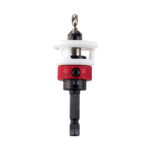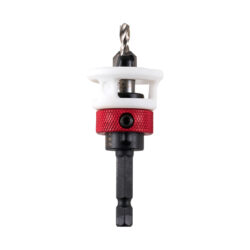
Quick Release Countersink Drill Bit: Chuck Engagement and Depth Stop Repeatability Define Fastener Seating
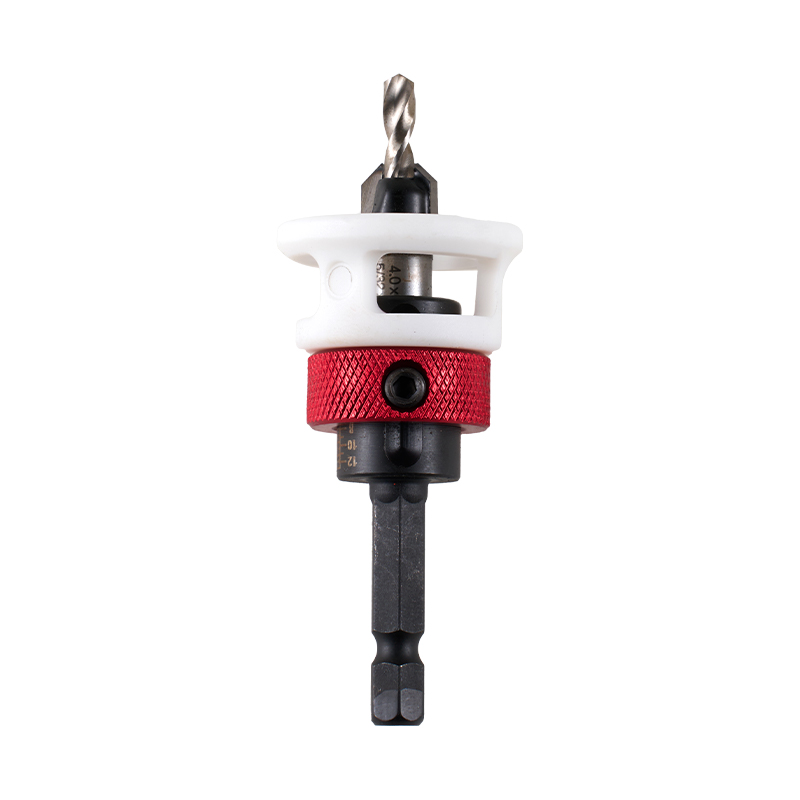
Quick release countersink drill bits are woodworking and metalworking tools that combine a pilot drill, a countersink cutter, and a quick-release shank that allows the bit to be changed without a chuck key. They are used in furniture assembly, cabinet installation, and general fastening where the screw head must sit flush or slightly recessed. The bit’s performance depends on two specifications that buyers weigh heavily: the chuck engagement and the depth stop repeatability. Those two factors determine whether the bit stays secure in the drill and whether the countersink depth is consistent from screw to screw.
Chuck engagement is the specification that determines whether the bit stays locked in the drill. The quick-release shank must engage the chuck’s mechanism fully and must not slip under the torque of drilling. A shank that is slightly undersized or that has a worn profile slips, which rounds the shank and damages the chuck. A shank that is oversized does not engage at all. Factories that control the shank’s dimensions and its hardness produce bits that lock securely.
Depth stop repeatability is the specification that determines whether the countersink depth is consistent. The depth stop is the collar or the sleeve that limits how far the cutter penetrates the material. It must hold its setting through repeated use and must not drift as the bit vibrates. A depth stop that slips produces screws that sit at different depths. One that is difficult to adjust slows the user. Factories that design the depth stop’s locking mechanism for repeated adjustment produce bits that hold their setting.
The cutter geometry affects both the countersink’s shape and the bit’s cutting speed. The cutter’s angle must match the screw head’s angle, typically 82 or 90 degrees. The cutter’s teeth must be sharp and must clear the chips. Factories that control the cutter’s angle and its sharpness produce bits that cut cleanly.
The pilot drill affects both the hole’s size and the bit’s guidance. The pilot drill must be sized for the screw’s minor diameter and must be centered with the cutter. A pilot drill that is off-center causes the bit to wander. Factories that machine the pilot drill and the cutter as a matched set produce bits that drill accurately.
The material and the coating affect both the bit’s life and its cutting performance. A high-speed steel bit with a titanium coating resists wear and reduces friction. A carbide-tipped bit lasts longer but costs more. Factories that specify the material and the coating for the intended material produce bits that perform.