Ring Sintered NdFeB Magnet: High-Strength Radial Magnetic Solutions for Rotating Equipment
A precision-engineered ring sintered NdFeB magnet offers powerful, radially oriented magnetic fields in a compact annular form, making it essential for brushless DC motors, servo motors, magnetic couplings, rotary sensors, and magnetic bearings. Sintered neodymium-iron-boron (NdFeB) ring magnets provide exceptional magnetic energy product (BHmax) ranging from 35 to 55 MGOe, enabling high torque density, efficient energy conversion, and compact motor designs in applications ranging from automotive electric power steering and e-bike hub motors to industrial pumps, wind turbine generators, and aerospace actuators. The ring shape allows for uniform radial magnetization (with alternating north-south poles along the circumference), enabling smooth rotation, reduced cogging torque, and improved system efficiency. Available in a wide range of inner and outer diameters, thicknesses, and heights, these magnets accommodate diverse mounting configurations including press-fit onto shafts, bonding into housings, or integration with back-iron yokes. Despite their moderate corrosion susceptibility, advanced coatings and alloy modifications ensure reliable long-term operation in demanding thermal and environmental conditions.
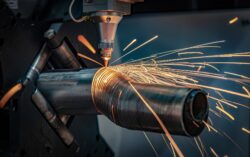
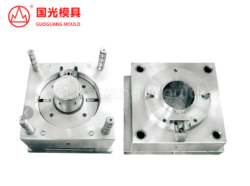
Manufacturing at a specialized facility begins with vacuum induction melting of high-purity neodymium, iron, boron, and performance-enhancing elements such as dysprosium, terbium, cobalt, or gallium—added to raise coercivity and thermal stability for high-temperature applications. The molten alloy is strip-cast into thin flakes, then processed through hydrogen decrepitation and jet milling to produce fine powders with optimized particle size distribution. These powders are compacted under a strong magnetic field using specialized ring dies that orient grains radially, creating the desired pole pattern and flux distribution. The green rings undergo cold isostatic pressing (CIP) to enhance density uniformity, then vacuum sintering at over 1000°C followed by staged annealing to maximize magnetic properties and structural integrity. The sintered rings are then precision-ground on inner and outer diameters, end faces, and chamfers using CNC cylindrical grinding equipment to achieve tight concentricity, parallelism, and dimensional tolerances down to ±0.02mm. Finally, protective coatings—including nickel-copper-nickel (Ni-Cu-Ni), zinc, epoxy, or Parylene—are applied through electroplating or electrophoretic deposition to protect against corrosion, with magnetizing fixtures precisely aligning each pole before final inspection.
Quality control at the factory includes comprehensive magnetic property testing using hysteresisgraphs and fluxmeters to verify remanence (Br), intrinsic coercivity (Hcj), and maximum energy product (BHmax), with hall probe mapping around the circumference to confirm radial flux uniformity and pole spacing accuracy. Dimensional inspections employ coordinate measuring machines (CMM), laser micrometers, and air gauges to verify inner/outer diameters, wall thickness, height, squareness, and concentricity. Coating adhesion and thickness are evaluated through cross-cut tests and salt spray corrosion exposure, while thermal demagnetization testing confirms performance stability across operational temperature ranges from -40°C to +220°C depending on grade. Mechanical properties including compressive strength and surface hardness are also assessed to ensure compatibility with press-fit assembly processes. The facility maintains ISO 9001 and IATF 16949 quality management systems, with full batch traceability from raw material sourcing to final inspection, ensuring every ring magnet meets rigorous performance and reliability standards.