Single Crate Mould: Rib-to-Wall Thickness Ratio and Demoulding Draft Define Crate Strength and Release
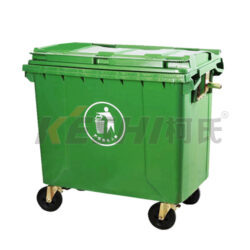
Single crate moulds are injection tooling sets used to produce one plastic crate per cycle, typically for logistics, agriculture, and beverage handling. A crate is a large, open container with reinforced corners, stacking features, and drainage or ventilation openings. The mould must fill the crate’s complex geometry, cool it evenly, and release it without distortion. The mould’s performance depends on two specifications that buyers weigh heavily: the rib-to-wall thickness ratio and the demoulding draft. Those two factors determine whether the crate carries its load without cracking and whether it releases from the mould without sticking.
Rib-to-wall thickness ratio is the specification that determines the crate’s strength and its mouldability. The ribs reinforce the walls and the base, and their thickness relative to the wall determines how the plastic flows and cools. A rib that is too thick relative to the wall creates a sink mark on the visible surface and a hot spot that extends the cycle time. A rib that is too thin does not provide enough reinforcement and may not fill completely. Factories that design the rib thickness as a ratio to the wall, rather than as an independent dimension, produce moulds that yield crates that are strong and free of sink marks.
Demoulding draft is the specification that determines whether the crate releases from the mould. A crate is a deep part with vertical walls, and the walls must have a draft angle that allows the part to slide off the core. A draft that is too small causes the crate to stick, which requires excessive ejection force and may distort the part. One that is too large increases the crate’s taper, which affects its stacking and its internal volume. Factories that specify the draft angle for the crate’s depth and its surface finish produce moulds that release cleanly.
The cooling layout affects both the cycle time and the crate’s dimensional stability. A crate has a large surface area and substantial ribs, and the heat must be removed evenly to avoid warping. Cooling channels that are not positioned near the ribs leave hot spots. Factories that design the cooling around the crate’s geometry produce moulds that run faster and yield stable parts.
The gate location affects both the fill and the crate’s appearance. A gate that is too small restricts the flow and produces incomplete parts. One that is too large leaves a mark that must be trimmed. Factories that place the gate where the flow reaches the full cavity and where the mark is least visible produce crates that fill completely.
The ejection system affects both the cycle time and the crate’s quality. A crate is a large part, and the ejection must push it off the core without tilting or stretching it. Factories that design the ejector layout for the crate’s geometry produce parts that eject straight.