Thick Hard Cover Notebook: Spine Board Rigidity and Block Rounding Define Long-Term Durability
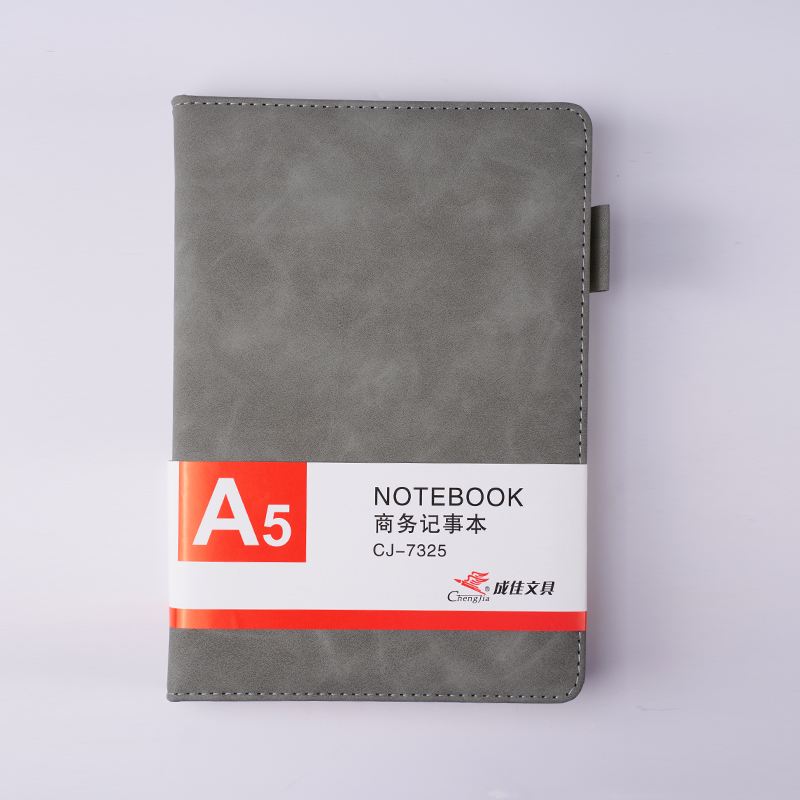
Thick hard cover notebooks are built for extended use, with a rigid cover and a substantial page block that can run to several hundred pages. They are used for journaling, project documentation, and professional record-keeping, where the notebook must protect its contents and survive months of handling. The notebook’s durability depends on two specifications that are set during production: the spine board rigidity and the block rounding. Those two factors determine whether the cover stays square and whether the pages open smoothly over the notebook’s life.
Spine board rigidity is the specification that determines whether the cover holds its shape. The spine connects the front and back boards and must resist the repeated opening and closing that a thick notebook receives. A spine board that is too thin flexes and eventually cracks at the hinge. One that is too thick is stiff and does not allow the cover to open fully. Factories that specify the board thickness for the page count and that reinforce the hinge produce covers that stay square.
Block rounding is the specification that determines whether the pages open smoothly. The page block of a thick notebook is rounded at the spine to allow the cover to open and to reduce the stress on the binding. A block that is not rounded enough binds the pages and prevents the notebook from opening flat. One that is rounded too much weakens the binding and may cause the pages to separate. Factories that control the rounding and that verify the block’s shape produce notebooks that open comfortably.
The binding method affects both the notebook’s durability and its ability to open flat. A sewn signature binding is more durable than a glued binding and allows the notebook to open flat. A glued binding is less expensive but may crack with heavy use. Factories that match the binding to the page count and the intended use produce notebooks that hold up.
The cover material affects both the notebook’s appearance and its resistance to wear. A paper cover over board is common, while a cloth or leather cover offers more durability. The cover must be attached to the board without bubbling or lifting. Factories that control the cover application produce notebooks that maintain their appearance.
The paper and the page count affect both the notebook’s weight and its handling. A thick notebook with heavy paper is difficult to carry. One with lightweight paper may show through. Factories that specify the paper for the page count produce notebooks that balance weight and writing quality.