Thick Refill Brush Marker: Where Refillability Changes the Economics of the Product
A Thick Refill Brush Marker is bought by people who use markers heavily enough that a disposable unit becomes wasteful. Calligraphers, sign painters, muralists, and workshop users who go through ink quickly are the core buyers for this format. The refillable design changes the product’s economics, but it also introduces a set of expectations that disposable markers never have to meet. Understanding those expectations explains why some refillable markers earn loyal users and others end up abandoned after the first refill.
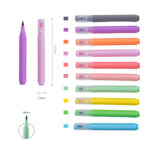
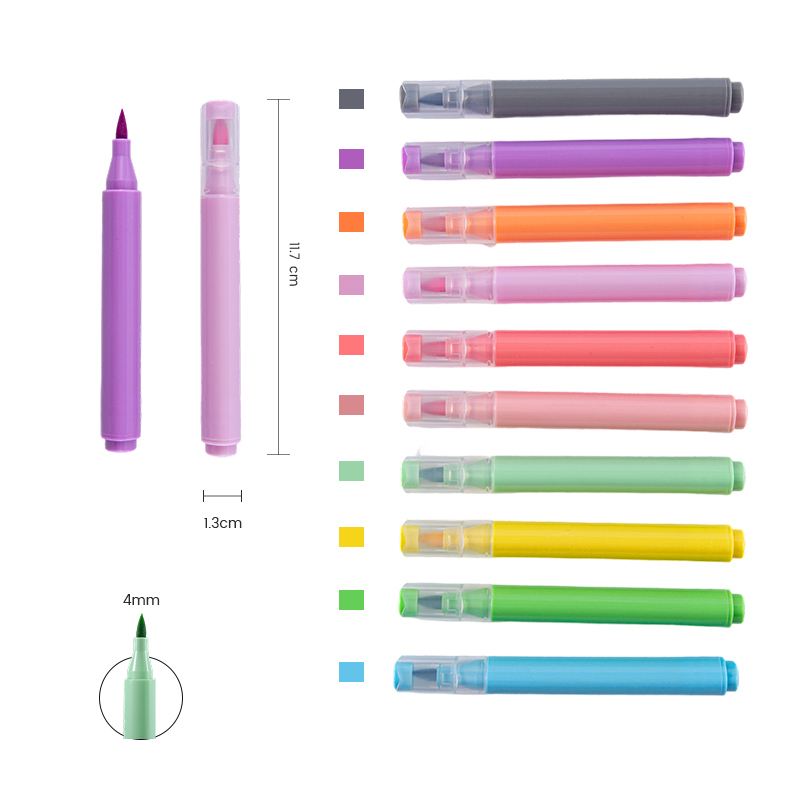
The thick brush tip is the defining feature. A broad brush nib lays down wide, expressive strokes and responds to pressure with visible line variation. That behavior depends on the nib holding its shape over time. A brush tip that frays or loses its point after a few refills produces strokes that no longer match what the user originally bought the marker for. Factories producing refillable brush markers typically specify nib materials that resist deformation and verify tip geometry during production, because the nib must survive multiple ink cycles rather than a single fill.
Refill mechanism design determines how easily the user can replenish the ink. Some markers use a dropper fill through the nib housing. Others use a cartridge that inserts into the barrel. Each approach has trade-offs. Dropper filling is simple and works with bulk ink, but it is messy and requires the user to judge the correct volume. Cartridge systems are cleaner and more consistent, but they lock the user into a specific ink format. Buyers who plan to use third-party inks often prefer dropper filling, while those who want predictable results prefer cartridges.
Ink capacity and flow rate must be matched to the nib size. A thick brush tip consumes ink faster than a fine nib, and a refillable marker that holds a small volume will require frequent refilling. This is a common source of frustration with refillable formats. Buyers who expect a refill to last as long as a disposable marker’s full life are often disappointed. Factories that publish ink volume per fill, rather than only claiming refillability, give buyers a clearer picture of what to expect.
Sealing is the engineering problem that refillable markers must solve and disposable ones avoid. The barrel must open for refilling and close securely enough to prevent the ink from drying between uses. Threaded connections, O-rings, and compression seals all appear in different designs. A seal that works when new may degrade after several refill cycles, which is why some markers develop drying issues partway through their service life. Buyers who refill frequently notice this deterioration earlier than occasional users.