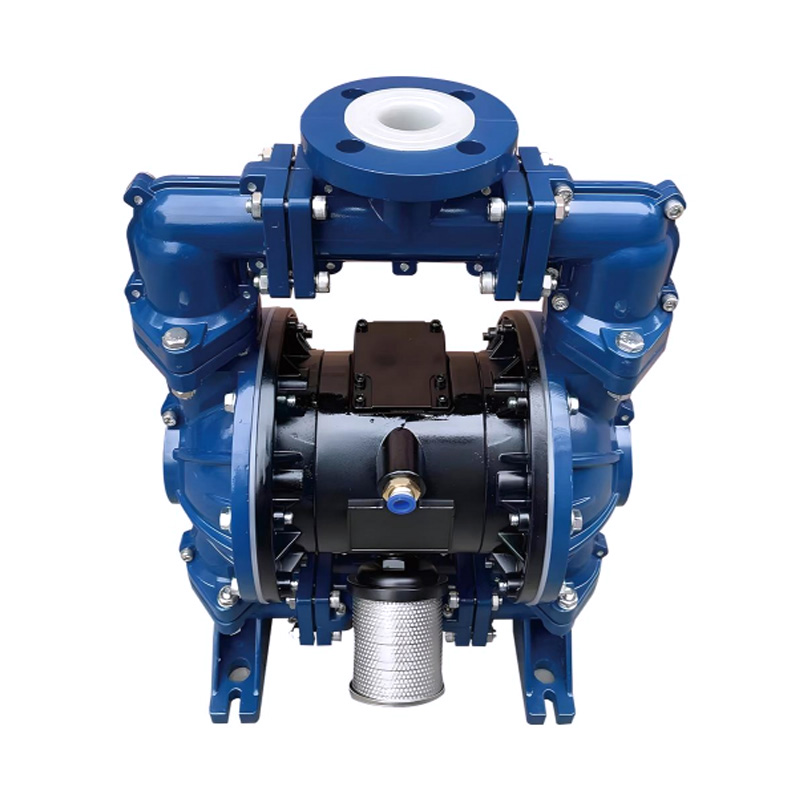
Air Operated Pneumatic Diaphragm Pump: Why Selection Is About the Application, Not the Datasheet
Few industrial pumps are as forgiving as the air operated double diaphragm design. It can run dry without damage, handle viscous slurries and shear-sensitive fluids, pass solids that would jam a centrifugal impeller, and be controlled with nothing more than an air valve. An Air Operated Pneumatic Diaphragm Pump is often chosen precisely because it tolerates the conditions that would destroy other pump types. But that flexibility also makes selection harder than it looks, because performance depends on the relationship between the air supply, the fluid, and the piping system rather than on any single rating.
The air supply is the starting point that buyers most often underestimate. Diaphragm pumps are driven by compressed air, and their flow output scales with the volume and pressure available at the inlet. A pump rated for a certain flow at 100 psi may deliver only a fraction of that at 60 psi. Facilities with undersized compressors or long air lines frequently find that the pump performs below expectations, not because the pump is faulty but because the air system cannot support it. Factories serving this market often publish performance curves across a range of air pressures rather than a single headline figure.
Fluid characteristics shape the internal configuration. Diaphragm material must match the chemical compatibility of the fluid, and the choice ranges from nitrile and EPDM to PTFE and Viton depending on temperature and chemical exposure. Ball and seat materials follow similar logic. A pump handling abrasive slurry requires different internal materials than one transferring solvent, even if the external dimensions are identical. This is why the same pump model appears in many configurations.
Solids handling is a distinguishing capability of this pump type. Passage size—the largest solid the pump can pass without clogging—depends on the valve and manifold design rather than the diaphragm itself. Applications involving wastewater sludge, ceramic slip, or food products with particulates require attention to this dimension early in the selection process. Oversizing the pump to compensate for uncertain solids content is common but can waste air and increase pulsation.
Pulsation is inherent to diaphragm pump operation and affects the piping system as much as the pump. Each diaphragm stroke produces a pressure pulse, and in systems with long discharge lines or sensitive downstream equipment, these pulses can cause vibration, water hammer, or measurement errors. Dampeners, flexible connections, and careful pipe routing reduce the effect, but the need for them depends on the application rather than the pump alone.