Red Auditorium Luxury Soft Seat: What Buyers Actually Evaluate Before Placing an Order
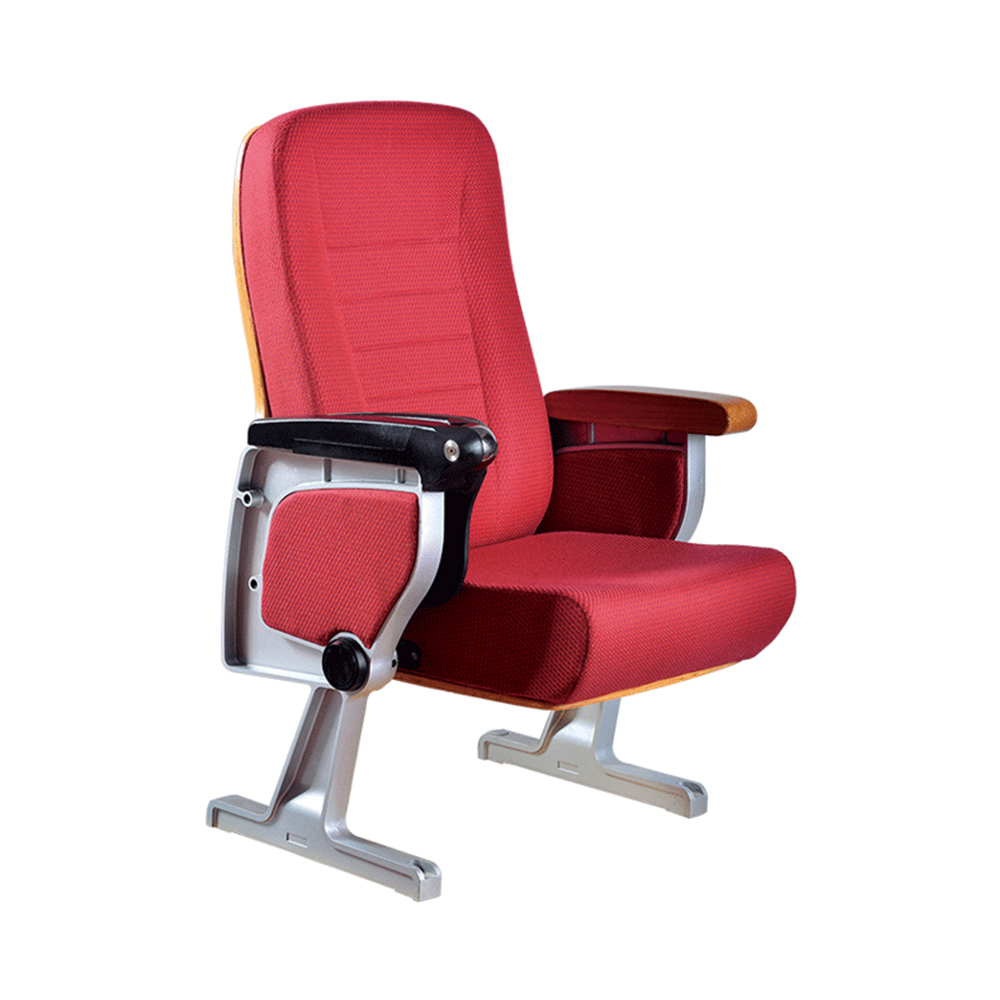
Walk into a newly fitted concert hall or conference center, and the first thing audiences notice is rarely the acoustics or the lighting. It is usually the seats—specifically, whether they look and feel like they belong in a premium venue. A Red Auditorium Luxury Soft Seat carries that expectation on its surface: the color must read as rich rather than flat, the cushion must feel supportive rather than soft, and the folding mechanism must operate quietly enough to disappear into the background.
For manufacturers, meeting those expectations is harder than it appears. The red covering is not simply a fabric choice. It is a decision that affects fading resistance under years of indirect lighting, crocking performance against dark clothing, and cleanability in venues where spills are inevitable. Factories that treat upholstery selection as an afterthought often find themselves fielding complaints two or three years after installation.
The frame underneath receives less attention from buyers but determines whether the seat survives daily use. Auditorium seating endures repeated folding, occasional misuse, and static loads that vary widely across body types. A frame that flexes slightly under load will eventually loosen at the pivot points, producing the wobble that signals a cheap installation. Manufacturers who control welding alignment and pivot tolerances tightly tend to see fewer warranty claims, even when their foam or fabric is comparable to competitors.
Foam specification is another area where cost pressure and comfort expectations pull in opposite directions. High-density molded foam holds its shape longer but costs more per unit. Cut foam offers flexibility in contouring but can compress unevenly over time. Many factories now use layered constructions, combining a firm base layer with a softer top layer to balance support and initial comfort. The equipment used to cut and shape these layers has a direct effect on consistency; a dull blade or misaligned guide produces cushions that vary from seat to seat in ways audiences notice immediately.
Assembly is where the visible and hidden qualities come together. Armrest alignment, stitching consistency, and the smoothness of the folding action are all evaluated during final inspection. Factories that invest in fixture accuracy and operator training tend to catch defects before shipment rather than after installation, when remediation costs multiply.
What ties these stages together is not any single machine or material, but the discipline of holding tolerances across a production run. Venue projects often require hundreds of identical seats, and a small deviation repeated across that quantity becomes a visible flaw. Manufacturers who understand this tend to structure their production around verification at each stage rather than relying on final inspection alone.
The red auditorium luxury soft seat market rewards factories that treat consistency as a product feature, not an inspection outcome. Buyers may not inspect the welding fixtures or foam cutting equipment, but they see the results every time they walk into a finished venue.