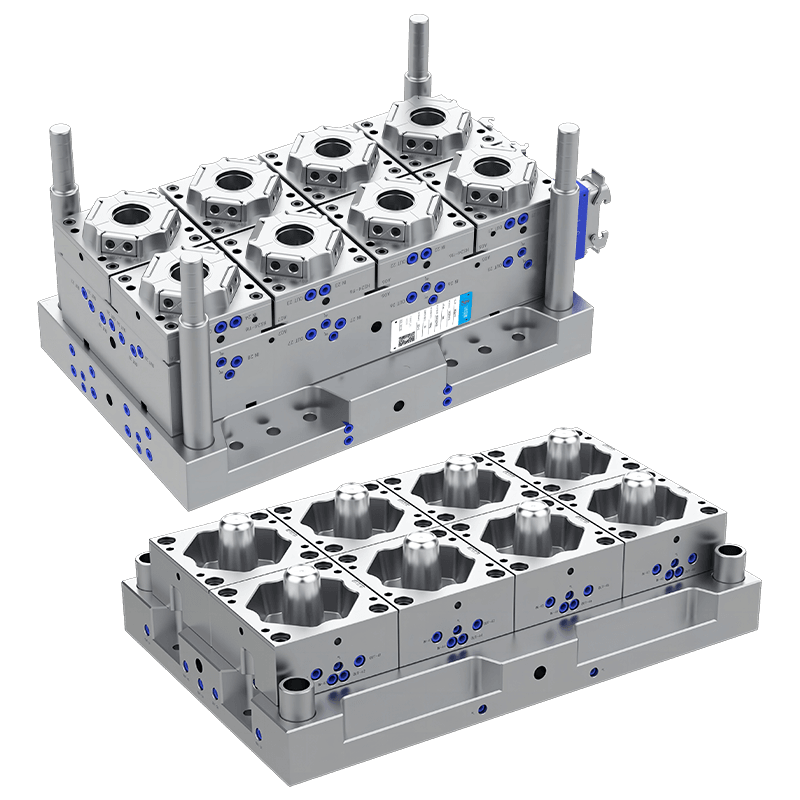
Bubble Tea Plastic Cup Molds: The Core Alignment Decides the Straw Hole
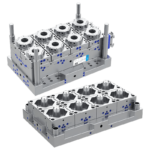
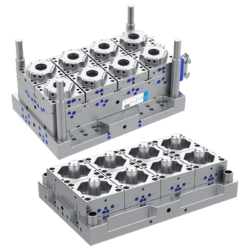
Bubble tea plastic cup molds produce the tall cups that beverage shops fill with tea, milk, and tapioca pearls, seal with a film, and hand to a customer who inserts a wide straw through the lid. Buyers compare cavity count, cycle time, and wall thickness. The specification that decides whether the straw goes in without cracking the lid or spilling the drink is the core alignment, because the cup’s roundness depends on the core and the cavity meeting precisely.
The core forms the inside of the cup, and the cavity forms the outside. If the core and the cavity are not aligned, the wall is thick on one side and thin on the other. A thin wall flexes when the straw is pushed through, which distorts the lid and breaks the seal. A thick wall wastes material and increases the cycle time. The cup’s roundness also affects how the lid fits and how the cup sits in a cup holder.
The core alignment is set during mould assembly. The core and the cavity are machined as a matched set, and the alignment is verified after assembly. A core that is off-center by a small amount produces a cup that is visibly oval. Factories that machine the core and the cavity together and that verify the alignment produce cups that are round.
The cooling layout affects the cup’s roundness after ejection. A cup that cools unevenly becomes oval, which affects the lid fit and the straw insertion. Factories that design the cooling around the cup’s geometry produce cups that hold their shape.
The rim must be flat and uniform for the sealing film. A rim that is warped does not seal, and the drink leaks. Factories that control the rim’s flatness produce cups that seal.
The stacking feature affects how the cups are handled before filling. A cup that stacks too tightly jams the denester. One that stacks too loosely collapses the stack. Factories that control the stacking step produce cups that work on the line.
The mould material and the cavity finish affect the cup’s appearance and the mould’s life. A hardened steel resists wear. A polished cavity produces a cup with a smooth finish. Factories that specify the material for the production volume produce moulds that last.
The practical question for a buyer is not the cavity count or the cycle time. It is how the core and the cavity align and whether the cup stays round. That answer decides whether the straw goes in and the lid seals. A cup that looks right in the sample and cracks at the straw hole was produced by a mould that treated alignment as a detail.