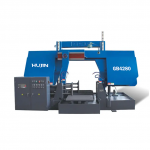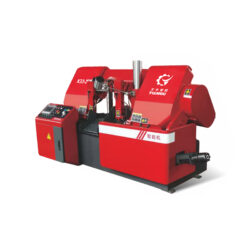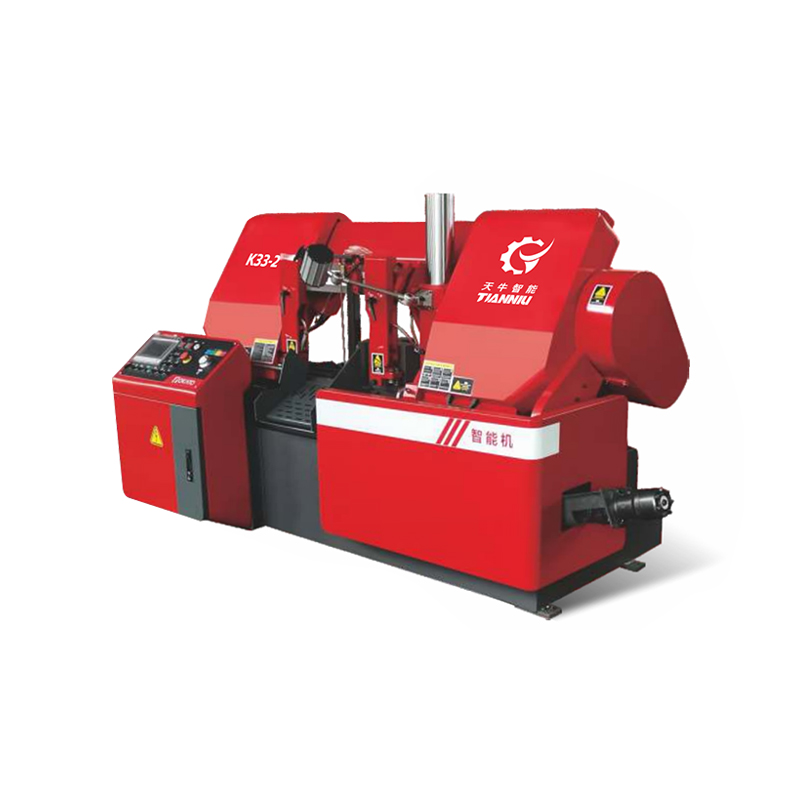
Efficient Horizontal Band Sawing Machines: The Return Stroke Decides the Throughput
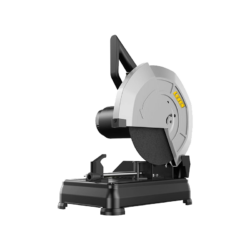
Efficient horizontal band sawing machines are evaluated by production managers on a different basis than general-purpose saws. The question is not whether the machine can cut a given material, but how many cuts it completes per shift. Buyers compare cutting capacity, blade speed, and feed control. The specification that decides the throughput is the return stroke, and it is the part of the cycle that the catalog does not describe.
The return stroke is the time the saw head takes to rise back to the start position after a cut. On a machine that runs a full cycle for every cut, the return stroke is dead time. A machine with a fast return and a controlled deceleration reduces that dead time without slamming the head. A machine with a slow return adds seconds to every cut, and over a shift those seconds become hours.
The feed and the return must be coordinated. A machine that feeds the stock while the head is returning completes the next cut sooner. A machine that waits for the head to reach the top before feeding the stock adds a step to every cycle. Factories that design the control to overlap the feed and the return produce machines that complete more cuts per shift.
The clamping sequence affects the cycle time. A vise that opens and closes quickly reduces the time between cuts. One that is slow or that requires the operator to position the stock manually adds time. Factories that design the clamping as part of the automatic cycle produce machines that run faster.
The blade’s life affects the throughput over a shift. A blade that dulls quickly requires a change, and a blade change stops the machine. Factories that specify the coolant path and the blade guide for the material produce machines that hold their blade life and their throughput.
The control system determines how much of the cycle is automatic. A machine that requires the operator to initiate each step runs slower than one that completes the batch. Factories that design the control for unattended operation produce machines that free the operator for other work.
The practical question for a buyer is not the cutting capacity or the blade speed. It is how long the return stroke takes and whether the feed overlaps it. Those two answers decide the number of cuts per shift. A machine that cuts quickly and returns slowly was designed for the cut and not for the cycle.