High-Decibel Metal Buzzers: Why the Mounting Decides the Sound
High-decibel metal buzzers are specified when a signal must be heard over machinery, traffic, or a crowded floor. Buyers compare sound pressure ratings, but the rating is measured under laboratory conditions. In the field, the mounting determines whether the buzzer’s output reaches the listener at the level the rating promises.
A buzzer mounted on a resonant surface radiates more sound than one mounted on a damped surface. A metal panel can amplify the buzzer’s output, while a plastic enclosure absorbs it. A buzzer mounted inside an enclosure with a small opening is muffled regardless of its rating. Factories that understand the mounting’s effect on the sound advise buyers on the installation, rather than relying on the datasheet figure alone.
The frequency determines how the sound cuts through background noise. Human hearing is more sensitive in the 2 to 4 kHz range, which is why many industrial buzzers operate in that band. A lower-frequency buzzer needs higher output to achieve the same perceived loudness. A higher-frequency buzzer cuts through machinery noise but can be irritating over long periods. Factories that offer the same buzzer platform in several frequencies let the buyer match the sound to the environment.
The drive circuit affects the buzzer’s behavior under different supply voltages. Some buzzers include an internal oscillator and produce sound when voltage is applied. Others require an external drive signal. A buyer who assumes all buzzers work the same way may order a unit that needs a driver circuit the panel does not provide. Factories that publish the drive requirement clearly reduce the risk of a mismatch.
The current draw affects the power supply and the battery life. A high-output buzzer draws more current than a low-output one. In battery-powered installations, the difference affects the runtime. Factories that publish the current draw at the rated voltage let the buyer plan the power supply.
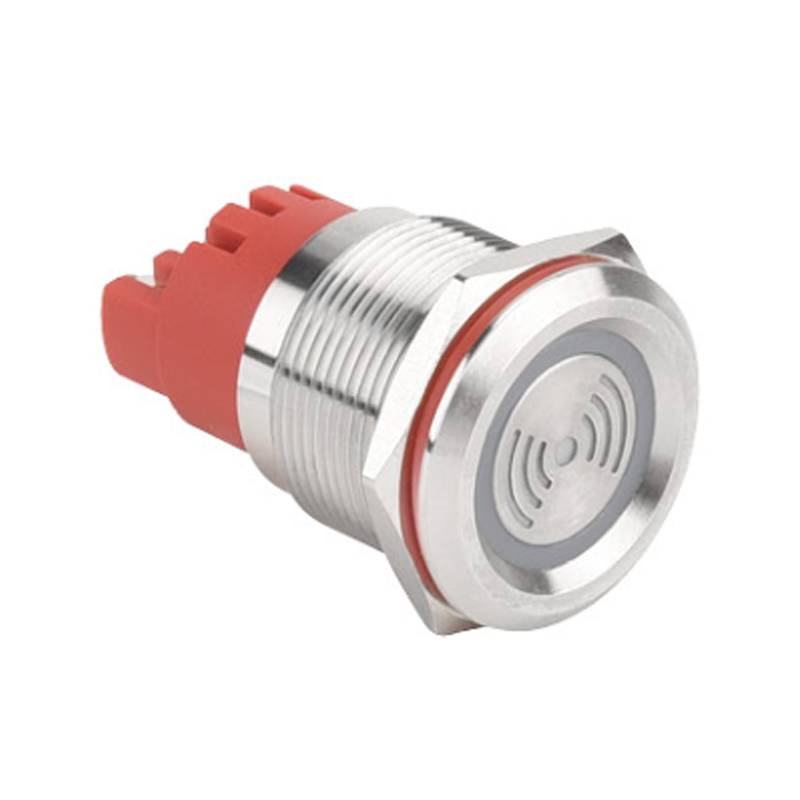
The housing material affects both the durability and the sound. Metal resonates differently than plastic, which can increase output or introduce unwanted overtones. Metal also survives impact, vibration, and temperature extremes. Factories that design the housing for the environment produce buzzers that last.
The sealing affects the buzzer’s ability to operate in wet or dusty conditions. The acoustic opening is a path for water and dust unless it is protected by a membrane or a grille. Factories that design the sealing as part of the acoustic path produce buzzers that maintain their output.
The market implication is that high-decibel metal buzzers compete on mounting guidance and frequency selection rather than on the sound pressure rating alone. Buyers who need the signal to be heard need a buzzer that performs in the installation. Factories that understand the mounting and the environment are better positioned than those that compete on the datasheet figure.