Outboard Engine Pistons: Marine Operating Conditions Keep Redefining the Specification
Outboard engine pistons operate in conditions that differ from automotive or industrial pistons in ways that affect material selection, cooling behavior, and corrosion resistance. The marine environment continues to push the specification in directions that a land-based piston does not face, and suppliers report that the differences show up in field failures rather than in catalog comparisons.
The cooling behavior of a water-cooled outboard differs from a liquid-cooled automotive engine. Cylinder temperature is regulated by water flow, which varies with boat speed, water temperature, and the condition of the water pump. A piston designed for a stable coolant temperature may experience wider thermal cycles in an outboard. Factories that specify a piston-to-cylinder clearance reflecting the outboard’s operating range, rather than a single design temperature, produce pistons that fit through the cycle.
Corrosion resistance matters more in a marine piston than in most other applications. Even with a sealed cooling system, the outboard’s environment exposes the engine to salt, humidity, and occasional water intrusion. The piston alloy must resist corrosion at the ring grooves and the pin bore, where moisture can accumulate. Some outboards use a coating or surface treatment on the piston. Factories that select the alloy and the treatment for the intended use, with saltwater applications requiring more protection than freshwater ones, produce pistons that last.
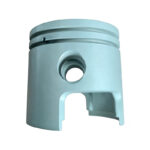
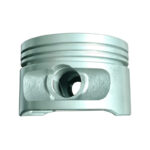
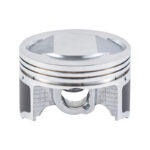
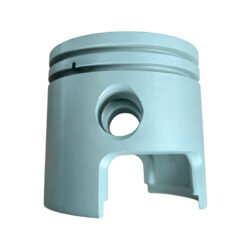
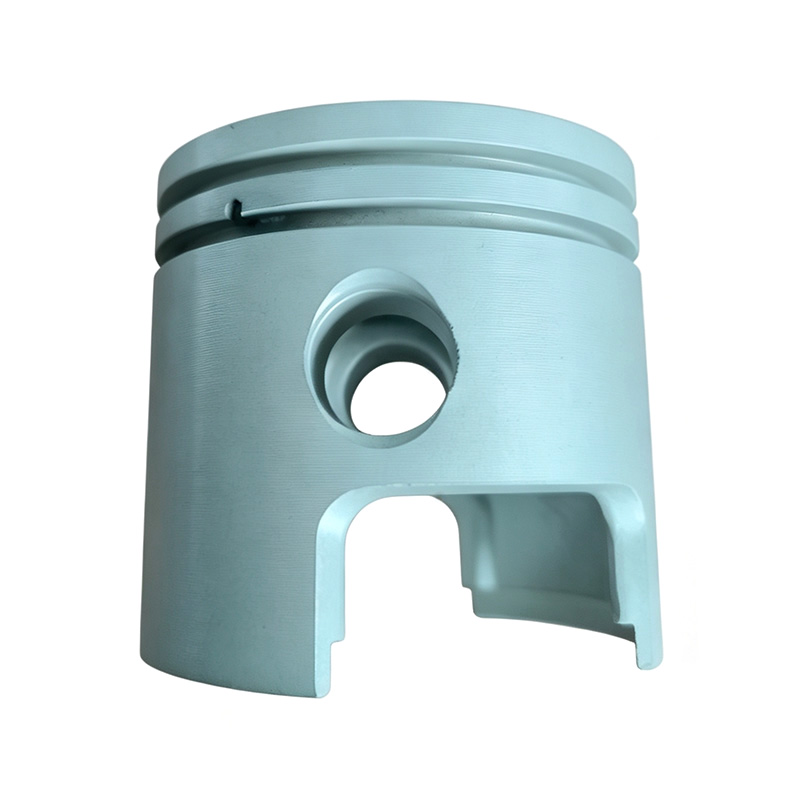
The ring land dimensions and the groove finish affect both compression and oil control. A two-stroke outboard piston may have different ring requirements than a four-stroke, because the two-stroke ports expose the rings to different conditions. Factories that machine the ring grooves after heat treatment and verify the dimensions with gauges produce pistons that seal.
The piston crown shape affects combustion and heat transfer. Outboard pistons often have a domed or contoured crown that matches the combustion chamber and directs the flame front. The crown thickness affects how quickly heat moves from the crown to the rings and the skirt. Factories that design the crown for the specific chamber and the intended operating rpm produce pistons that perform.
The pin bore and the wrist pin fit determine how the piston connects to the rod. A loose pin bore produces noise and accelerates wear. Factories that match the pin bore to the connecting rod’s design produce pistons that assemble correctly.
Weight matching is important in multi-cylinder outboards. A piston that is heavier than the others creates an imbalance that stresses the crankshaft and the bearings. Factories that weigh each piston and match them within tolerance produce sets that run smoothly.
The market implication is that outboard engine pistons compete on marine-specific cooling and corrosion specifications rather than on automotive crossover. Buyers who replace a piston in a marine engine need it to withstand the thermal cycles and the salt environment. Suppliers that treat the alloy, the cooling behavior, and the ring and pin dimensions as connected specifications are better positioned than those that treat an outboard piston as a variation of an automotive piston.