How to Assess a Mold Safety Lock Manufacturer
What defines the core mechanism and actuation type
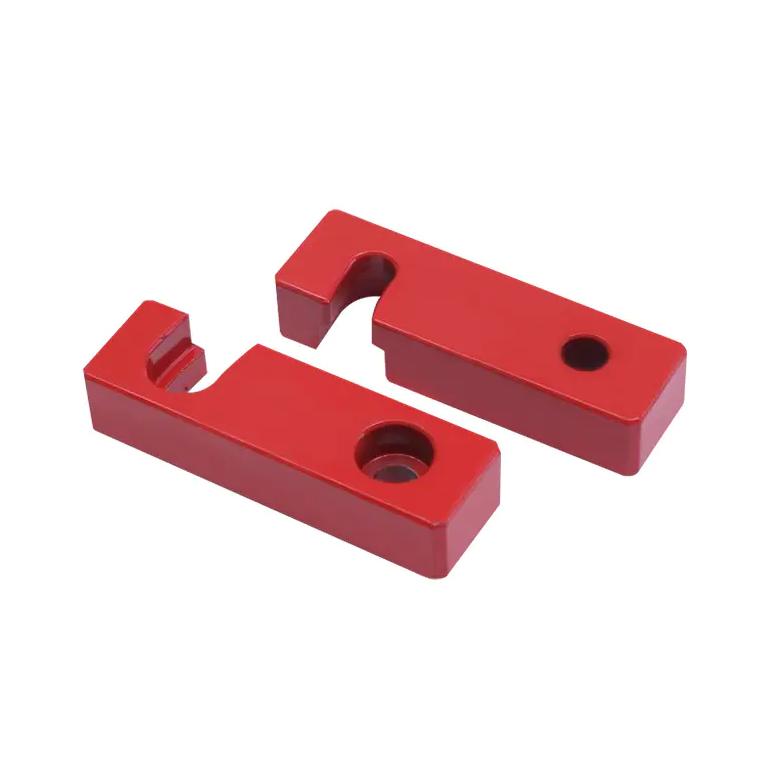
A professional Mold Safety Lock manufacturer produces devices designed to physically prevent mold clamping when conditions are unsafe, typically during setup, maintenance, or when sensors detect an obstruction. Core mechanisms include manual slide bolts, solenoid-activated pins, and hydraulic or pneumatic interlock systems. The choice between manual and automated actuation depends on the press’s automation level and safety protocol requirements. The lock’s design must ensure positive, fail-safe engagement, meaning it defaults to a locked position if power or air pressure is lost, which is a fundamental safety principle.
How are strength and durability engineered to withstand tonnage
The Mold Safety Lock is a load-bearing component that must resist the full clamp force of the injection molding machine or die casting press. Manufacturers use high-tensile alloy steels, often through-hardened or surface-treated, for the lock body and engagement pins. Critical design factors include shear pin diameter, engagement depth, and the structural integrity of the housing. Finite Element Analysis is commonly used during design to simulate stress distribution under maximum load, ensuring the lock does not deform or fail, thereby reliably protecting personnel and the mold tooling.
What integration and signaling capabilities are standard
Modern Mold Safety Lock systems are integrated into the machine’s overall safety circuit. This involves providing standard electrical interfaces, such as plug connectors with positively driven contacts, which connect to the press’s Programmable Logic Controller or safety relay. The lock provides a feedback signal to confirm its fully engaged or disengaged status. Advanced locks may include diagnostic LEDs and support for safety communication protocols. The manufacturer’s understanding of global safety standards (e.g., ISO 13849, ANSI B11) for circuit integration is crucial for compliance.
What customization options exist for different mold and press types
Given the variety of mold sizes and press platens, one-size-fits-all is not viable. A proficient manufacturer offers customization in lock size, stroke length, mounting configuration, and engagement method. This includes designing locks for specific press brands, creating sub-plate-mounted solutions, or developing systems for large, multi-piece molds. They work from technical drawings of the mold or platen to ensure the lock fits precisely and functions without interfering with other components like ejector plates or hydraulic lines.