Motor and Battery Technology in a Power Drills Factory
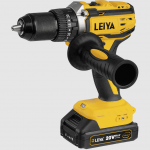
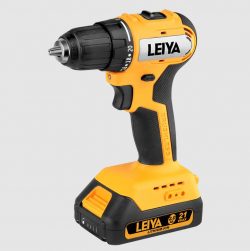
Defining the Core of Cordless PerformanceThe capabilities of a modern cordless drill are fundamentally defined by two integrated systems: the motor that provides rotational force and the battery platform that powers it. A full-service power drills factory must have expertise across the spectrum of available technologies to cater to different market segments, from entry-level DIY tools to professional-grade equipment. The choice between motor types and the design of the battery ecosystem are central to a factory’s product strategy.
Brushed DC Motors: The Established WorkhorseMany factories, especially those focusing on cost-effective models, still utilize brushed DC motors. This technology is mature, simpler to manufacture, and offers good performance for general-purpose drilling and driving. In a brushed motor, carbon brushes deliver current to a spinning armature. While reliable, they have inherent limitations: the brushes wear over time (requiring maintenance), generate friction and heat, and are less efficient than their brushless counterparts. A power drills factory using this technology often targets the value-oriented segment of the market.
Brushless DC Motors: The High-Efficiency StandardFor premium performance, leading power drills factory operations have shifted to brushless DC (BLDC) motors. This design uses electronic controllers to alternate current in the stationary windings, causing a ring of permanent magnets to rotate. The advantages are significant:
Higher Efficiency and Longer Runtime: No energy is lost to brush friction, converting more battery power into useful work.
Greater Durability: No brushes to wear out, leading to a much longer motor lifespan.
Compact Size and Power Density: Can produce more torque in a smaller, lighter package.
Intelligent Control: The electronics can enable features like programmable torque settings and advanced speed control. A factory specializing in brushless tools is positioned in the professional and advanced DIY markets.
Battery Voltage Platforms and CapacityThe battery system defines the power tool “family.” A versatile power drills factory typically produces drills across several standard voltage platforms:
12V/10.8V Compact Platform: For light-duty work and overhead applications where light weight and maneuverability are key.
18V/20V Max Standard Platform: The most common for general-purpose professional and DIY use, offering a strong balance of power and runtime.
36V/40V+ High-Power Platform: For heavy-duty drilling, mixing, and demanding applications where maximum power is required.Within each voltage, battery capacity (measured in Amp-hours, Ah) varies (e.g., 2.0Ah, 4.0Ah, 5.0Ah+). Higher Ah ratings provide longer runtime but add weight and cost. A key offering from a forward-thinking power drills factory is a shared battery platform where the same battery pack works across dozens of different tools (drills, saws, lights), which is a major selling point for users investing in a cordless system.