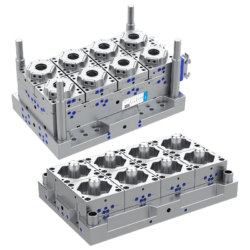
Bubble Tea Plastic Cup Mold: Wall Uniformity and Rim Sealing Determine Cup Performance
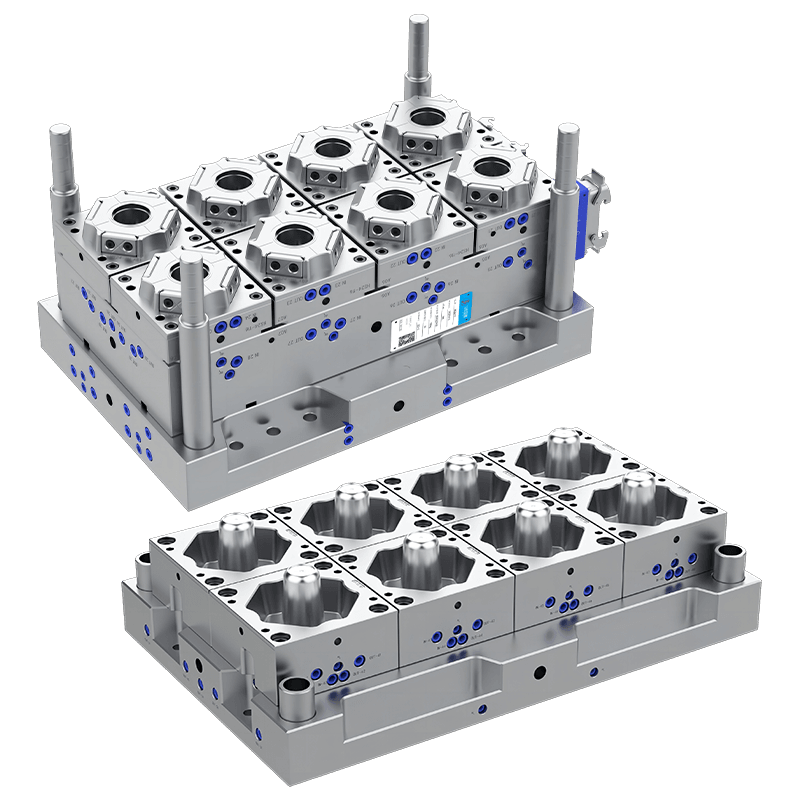
Bubble tea plastic cup molds are specified by packaging producers who supply the beverage industry, where the cup must hold a filled drink, accept a sealing film or a dome lid, and withstand the straw insertion without cracking. The cup is a tall, thin-walled container with a specific rim geometry and a base that must sit flat on a counter. The mold that produces it must fill the tall cavity evenly, cool the part without warping, and hold the rim dimensions that the sealing equipment requires. Buyers evaluating this category tend to focus on wall uniformity and rim sealing, because those two factors determine whether the cup performs in service.
Wall uniformity is the specification that matters most in a tall cup. The plastic must flow from the gate at the base to the rim without losing pressure, and the wall must remain consistent from bottom to top. A cup with a thin wall near the rim will crack when the lid is pressed on or when the straw is inserted. One with a thin wall near the base may leak. Factories that design the gate and the runner to deliver the plastic at the correct rate and that optimize the cooling to prevent sagging produce cups with consistent wall thickness.
Rim sealing is the specification that determines whether the cup works with the filling line. Bubble tea cups are typically sealed with a film that is heat-sealed to the rim, or closed with a dome lid that snaps over the rim. The rim must be flat and dimensionally accurate, or the seal will leak. The rim must also be strong enough to resist the force of the sealing equipment and the lid application. Factories that machine the rim to tight tolerances and verify its flatness produce cups that seal reliably.
The base and the stacking feature affect how the cups are handled before filling. A cup that does not sit flat on the counter is inconvenient to fill. One that stacks too loosely takes up too much space in the carton. The base and the stacking feature must be designed as a matched set, and the mold must hold their dimensions across the production run. Factories that treat the base and the stacking feature as part of the cup’s function, rather than as secondary details, produce cups that work on the filling line.