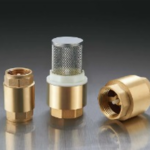
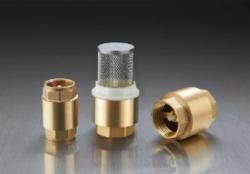
OEM Brass Check Valve Factory: Spring Rate and Cracking Pressure Define the Build-to-Print Relationship
OEM brass check valve factories produce valves to another company’s specification, sold under that company’s label. The arrangement changes what the factory is actually selling. The brand owner does not buy brass or springs. They buy a valve that opens at a specific pressure, closes reliably, and fits their system. The factory must translate that requirement into production decisions the customer never sees. In this category, two specifications drive most of the build-to-print relationship: the spring rate and the cracking pressure.
The cracking pressure is the differential pressure required to open the valve. It is the specification the brand owner cares about most, because it determines how the valve behaves in the system. A valve that opens at too low a pressure may allow backflow before the pump starts. One that opens at too high a pressure may restrict flow and cause the system to underperform. The brand owner typically specifies a cracking pressure range, and the factory must select a spring that delivers that range consistently across the production run.
The spring rate is the factory’s lever for meeting the cracking pressure specification. A stiffer spring produces a higher cracking pressure. A lighter spring produces a lower one. The relationship is not linear across all designs, and it depends on the seat diameter, the disc weight, and the flow path. Factories that understand the relationship between the spring rate and the cracking pressure can adjust the valve to meet the customer’s specification without changing the body or the seat. Those that treat the spring as a catalog item may produce valves that are within tolerance on the bench and inconsistent in the field.
The seat and disc design affect both the cracking pressure and the sealing performance. A soft seat, such as a rubber or PTFE insert, seals tightly but may be sensitive to debris. A metal-to-metal seat resists debris and high temperatures but may leak slightly. The disc weight affects the cracking pressure, particularly in a vertical installation where gravity assists or opposes the opening. Factories typically match the seat and disc design to the application, and they verify the cracking pressure with the valve in the orientation it will be installed.
The brass grade affects the valve’s corrosion resistance and its pressure rating. A standard brass may be adequate for clean water. A dezincification-resistant brass is specified where the water is aggressive. The factory must document the grade and its corrosion performance, because the brand owner’s warranty depends on the valve performing in the intended application.