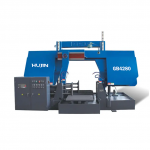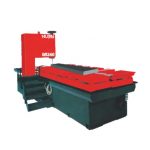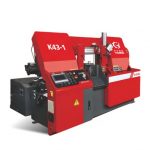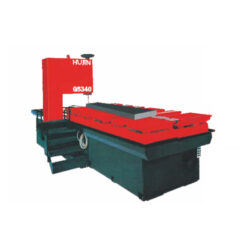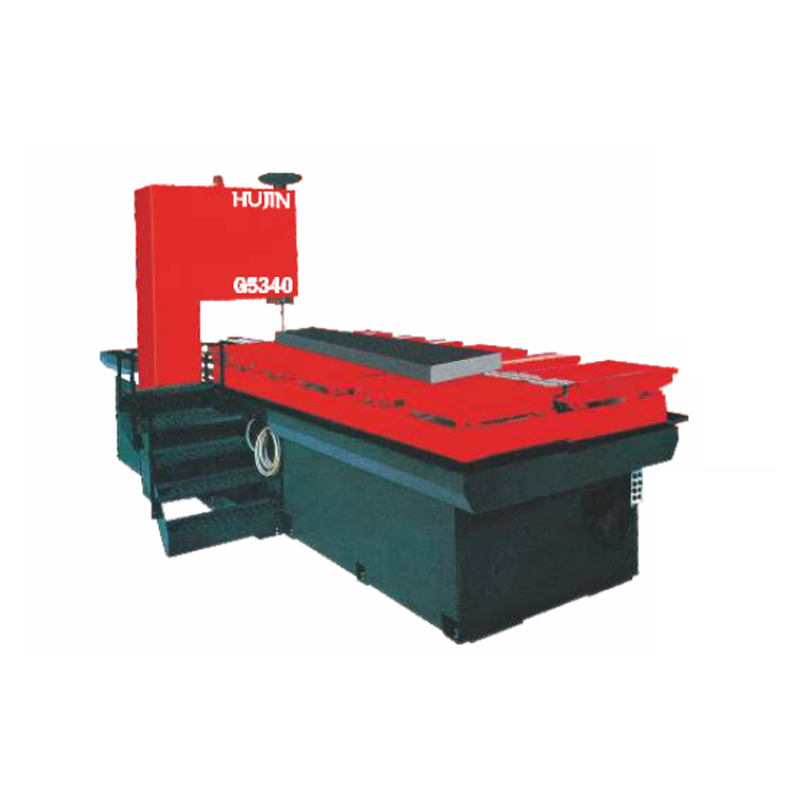
Efficient Horizontal Band Sawing Machine: Cycle Time and Blade Utilization Define the Machine’s Economics
Efficient horizontal band sawing machines are evaluated by production managers on a different basis than general-purpose saws. The question is not whether the machine can cut a given material, but how many cuts it can complete per shift and how much blade life each cut consumes. That shift in perspective moves the focus from maximum capacity to cycle time and blade utilization, because those two factors determine the machine’s cost per cut over its service life.
Cycle time is the specification that defines the machine’s throughput. It includes the load time, the clamping time, the cut time, the return time, and the unload time. A machine that cuts quickly but requires long setup between cuts may be slower overall than one with a lower cutting rate and faster handling. Factories that design the clamping, the feed, and the return as a coordinated sequence, rather than as independent functions, produce machines that complete more cuts per shift.
Blade utilization is the specification that determines the consumable cost. A blade that completes many cuts before it dulls reduces the cost per cut. Blade life depends on the blade’s material, the tooth geometry, the cutting parameters, and the coolant delivery. A machine that runs the blade at the correct speed and feed for the material extends blade life. One that runs the blade at a single setting regardless of the material consumes blades faster. Factories that provide material-specific cutting parameters and a coolant system that reaches the cut zone produce machines that lower the consumable cost.
The clamping and the material handling affect both the cycle time and the operator’s effort. A machine with a quick-acting vise and a material support that positions the stock automatically reduces the time between cuts. One that requires the operator to position each piece manually adds time and fatigue. Factories that design the material handling as part of the machine, rather than as an accessory, produce machines that run more efficiently.
The control system determines how much the machine can run without operator intervention. An efficient machine may include a program that sets the cut length, the number of pieces, and the cutting parameters. The operator loads the stock and starts the cycle, and the machine completes the batch. Factories that design the control for unattended operation produce machines that free the operator for other tasks.