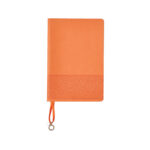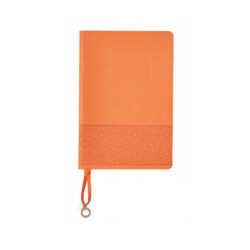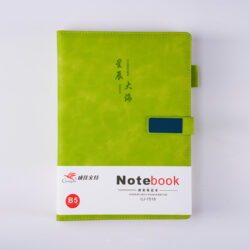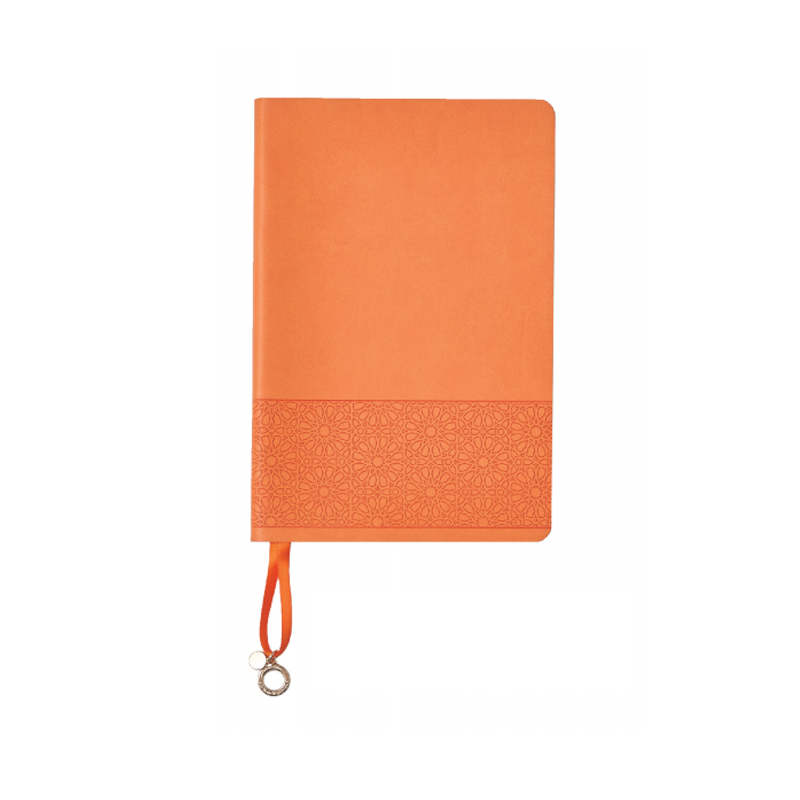
PVC Cover Double Loop Notebook Diary: The Cover Film and Page Edge Decide Daily Writing
A PVC cover double loop notebook diary is a journal with a smooth PVC outer cover and twin-loop wire binding along the spine, used for daily records, schedules, memos, and personal notes at school, office, home, and field carry. Buyers usually compare cover color, inner paper weight, page count, and diary layout. What most comparisons miss is the double-loop binding and how the PVC cover moves with it; that fit decides whether the diary keeps opening cleanly and holding its pages over time.
The double loop binding is the spine the whole book turns on. Two continuous wires form paired rings that pass through punched holes along the page edge, holding the stack together and letting it open flat. Loops bent unevenly leave rings open or pinched, so pages slip out or fail to turn cleanly; loops that do not close fully leave sharp ends catching on bags and clothing. Forming loops to a uniform round shape, closing each ring securely, and checking the spine produces a diary that turns pages smoothly and stays fastened.
Hole alignment decides how the binding meets the paper. Punched holes must sit in a straight line and match loop spacing; holes off line leave some rings carrying the whole load while others hang loose. A torn or oversized hole lets the page pull free with repeated turning. Matching the punch pattern to wire pitch, and keeping holes cleanly cut, keeps every page retained in its ring through daily use. The loop diameter must also fit the paper thickness: binding too tight keeps the stack curled, while oversized loops add gap between rings and bulk the book.
The PVC cover affects feel and protection. PVC resists light moisture and wipes clean, but a cover too thin wrinkles and scuffs easily; one too stiff fights the binding and refuses to lay flat. Cover edges should be sealed or folded so the material does not split or lift along the spine. At the hinge, the PVC must flex with every opening; a cover that cracks at the crease, or pulls away from the binding, leaves pages exposed. Matching cover thickness to the binding keeps protection intact over time.
Cover-to-book alignment decides how the diary sits in hand. The PVC panels should line up with the paper stack, neither overhanging unevenly nor leaving pages exposed. A cover cut off-square shifts to one side when closed, catching in pockets and wearing corners faster. Assembling cover and pages square, and trimming panels to matched size, produces a diary that feels even from the first entry.
Set two diaries side by side and the cover shade or printed grid is what shows first, but neither of those survives a month of daily writing. The things that do are the loops closing uniformly and holding the pages, the holes matching the binding pitch, and the PVC flexing with the spine without cracking or lifting. A diary that sheds pages, catches on clothing, or splits its cover at the hinge was assembled by treating the loop binding and cover fit as a minor detail; the book that lasts was built around the spine first, the cover second.