Fried Ice Cream Roll Cart Machine: The Cold Plate Decides the Roll Form
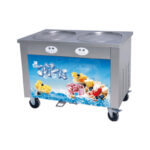
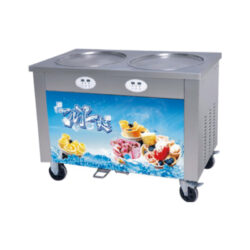
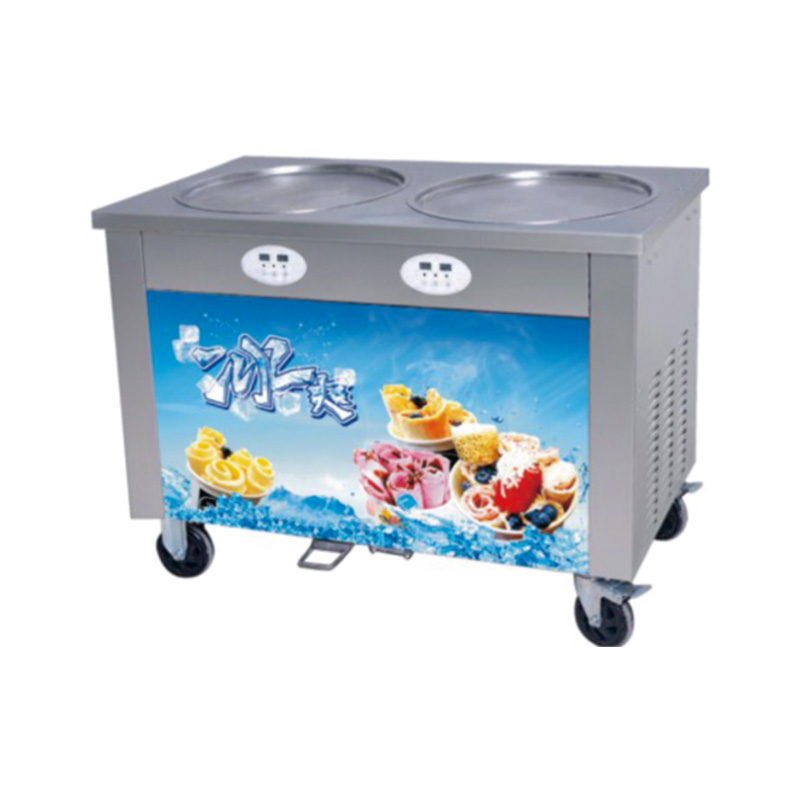
A fried ice cream roll cart machine is a mobile or counter cart built around a chilled flat griddle where liquid ice cream mix is spread, frozen, and scraped into rolls, used by street vendors, dessert stalls, mall carts, and catering events. Buyers usually compare cart appearance, number of wheels, advertised freezing speed, and the included tools or toppings space. The property that decides whether the mix freezes evenly and the rolls scrape up cleanly is the flatness and temperature uniformity of the cold plate, and it is the feature most buyers overlook.
The cold plate is where every roll forms. The flat griddle surface must chill evenly across its whole area, so poured mix sets at the same rate near the center and the edges. A plate with warm spots leaves part of the mixture soft and runny while the rest freezes solid, and the scraper cannot roll it into clean curls; an evenly cooled surface lets the whole batch reach working hardness together.
Surface flatness and finish affect scraping. The plate must be level and smooth, with no dents, waves, or rough patches that catch the scraper or leave unspread mix. A warped or pitted surface rides over low spots and freezes the mix unevenly; a level, smooth food-grade finish lets the scraper travel freely and lift each roll in one pass.
Freezing recovery keeps up with repeated batches. After a batch is scraped off, the plate must return to working temperature quickly so the next pour can start without a long wait. An undersized cooling system drops in capacity under continuous use, and later batches stay soft; a system matched to the plate size recovers steadily through a busy service run. The compressor, cooling lines, and insulation around the plate must also be sized to hold griddle temperature without cycling or drifting, so the surface keeps a steady working cold.
Cart structure carries the cold plate and the work load. The frame must sit square and rigid so the heavy plate stays level rather than twisting on an uneven base. A soft or flexing frame lets the griddle tilt, and mix runs to one side; a sturdy frame keeps the plate flat and stable through operation and transport. Where the machine is a cart, the wheels must roll smoothly and lock in place when serving, and the cart must level out on site so the plate does not sit at an angle.
Drainage, cleanability, and tools support the station. The plate area should let spilled mix and rinse water drain or wipe away, with no pockets where sweet residue collects; an open, easy-to-wipe surface keeps the cart cleanable after each batch. The scraper should suit the plate width and ride flat against the surface, with a defined place for tools and toppings that does not crowd the freezing area.
Run a trial batch rather than judging the cart from the outside: pour a thin spread of mix and watch whether it freezes evenly center to edge, run the scraper across to check for catch points or rough spots, let the plate recover after one batch and time the next freeze, check that the cart sits level and does not rock, and inspect the surface and drainage for residue traps. These cold-plate uniformity, surface flatness, freezing recovery, refrigeration sizing, frame rigidity, mobility, and cleanability qualities decide whether the roll machine forms clean rolls and keeps up with service. A maker that builds an even, level cold plate, matches the cooling system to the plate, and keeps the cart frame square sends out machines that roll consistently; one that treats the plate and cooling as secondary details delivers carts with warm spots, scraping catch points, slow recovery, or a tilting work surface.