Portable Spot Welder Factories: The Arm Reach Decides the Panel
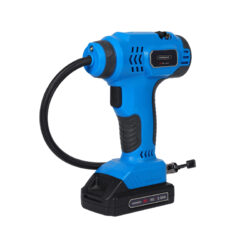
Portable spot welder factories produce handheld machines used in auto body repair, appliance manufacturing, and light fabrication, where the welder is brought to the panel rather than the panel to a fixed machine. Buyers compare current output, portability, and tip size. The specification that decides whether the welder can reach the weld is the arm reach, and it is the number the buyer evaluates least.
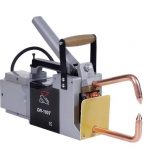
The arm is the structure that carries the electrode to the weld point. In auto body repair, the weld is often on a panel that is already installed, and the arm must reach around the panel’s edge, through a door opening, or into a wheel arch. An arm that is too short does not reach the weld. One that is too long flexes under the electrode force, which reduces the pressure at the tip and weakens the weld. The arm’s length must match the reach requirement and its stiffness must match the force.
The arm’s cross-section determines its stiffness. A thin arm flexes more than a thick one, and the flex absorbs part of the electrode force. Factories that specify the arm’s cross-section for the force and the reach produce welders that deliver the pressure to the weld.
The arm’s shape affects the access. A straight arm reaches into open areas. A cranked arm reaches around obstructions. Interchangeable arms let the operator match the arm to the panel. Factories that offer multiple arm shapes produce welders that work on different panels.
The electrode holder must transmit the force without flexing. A holder that is mounted at the end of a long arm must be designed for the force and the reach. Factories that design the holder and the arm as a system produce welders that deliver the force.
The cable’s length affects the reach. A cable that is too short limits the area the operator can reach. One that is too long adds weight and reduces the current. Factories that specify the cable length for the application produce welders that are practical.
The transformer’s size affects the portability. A larger transformer delivers more current but weighs more. Factories that balance the transformer against the portability requirement produce welders that suit the job.
The practical question for a buyer is not the current output or the portability. It is the arm reach and whether the arm is stiff enough to deliver the force. Those two answers decide whether the welder reaches the panel and whether the weld holds. A welder that produces a good nugget on a bench panel and cannot reach the installed panel was built with an arm that treated the reach as a detail.